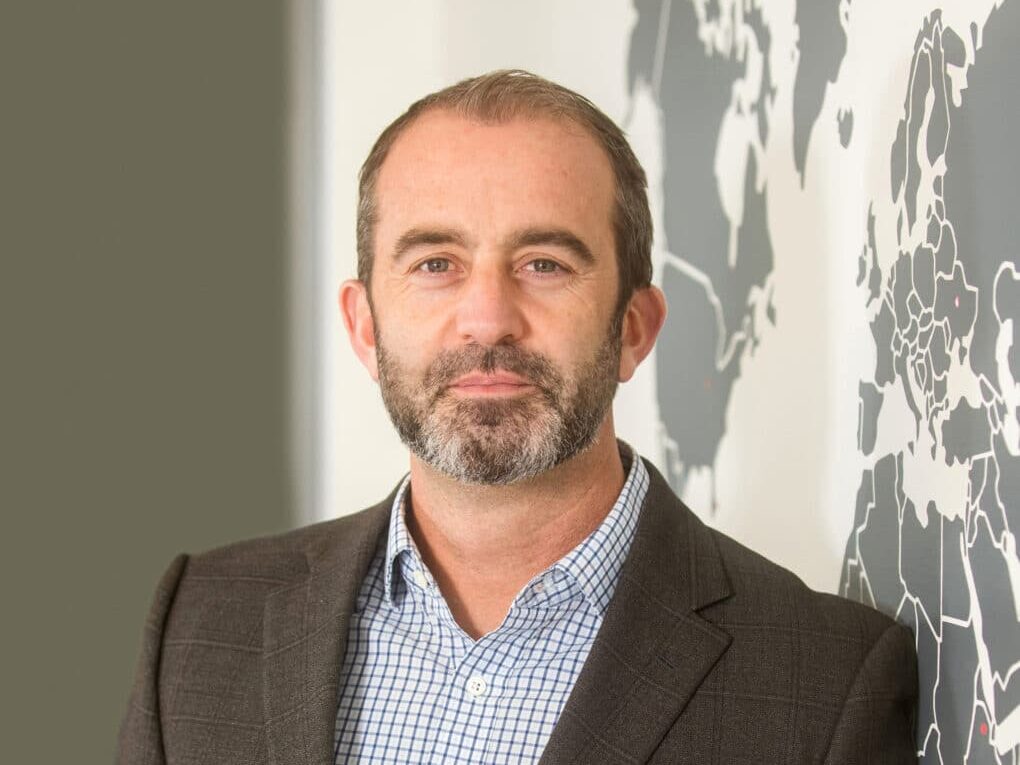

Simon Geale, Chief Procurement Officer at Proxima, discusses why the latest easing of U.S.–China trade tensions is a “pause, not a peace treaty”
To begin, could you introduce yourself and tell us a little about your role at Proxima, and how your work intersects with global procurement and supply chain strategy?
I’m Simon Geale, and I work for a global procurement and supply chain consultancy called Proxima. I’m on the board, as Chief Procurement Officer, but I oversee our marketing, market relations, messaging, solutions and some of our digital initiatives, alongside advisory work. It’s a varied portfolio, but at heart I’m a procurement practitioner and enthusiast.
We help organisations get the very best from suppliers, which generally represents about 70% of all the money they spend every year. Businesses depend upon these suppliers to achieve all sorts of objectives, and our job is to make that happen, while ensuring every pound is well spent and budgets stretch as far as possible. We’re also part of Bain and Company, and as their procurement delivery arm we’re here to bridge bold strategies into tangible results.
You described the recent easing of tariffs and rare earth restrictions as a “welcome pause” in the economic tug of war between the US and China. How significant is this development for global trade stability in the short term?
It’s very significant in the short term, and perhaps not unexpected in this drawn-out trade conflict. Tensions between the US and China have been high for years, with periods of escalation and de-escalation.
I’d call this a pause rather than a peace treaty. It’s giving businesses a moment to breath, but probably not enough time to set up sustainable resilience in supply or sales. While tariffs grab headlines, the issue is really about economic control, particularly over high-value supply chains in automotive, defence, pharma and tech.
A deal on rare earths will be the win for the US, while continued low-tariff access benefits China. There’s a lot at stake, and any reduction in tensions is welcome.
The announcement followed a high-level meeting between Presidents Trump and Xi. In your view, what does this tell us about the balance of power and interdependence between the US and China’s supply chains?
The fact that this “deal” followed a high-level meeting between Trump and Xi underscores that this conversation is about more than just the balance of numbers. It’s an indication that it’s about power and influence on the global stage.
The reality is that there is a deep entanglement across supply chains. Each country is trying to build resilience and reduce reliance on the other, but neither can unwind decades of interdependence overnight.
Semiconductors and rare earth minerals are fundamental to the high value supply chains that both Trump and Xi want to invest in and own on a global scale. This makes the China conversation incredibly strategic from a trade and defence perspective.
How exposed are Western supply chains to disruption in these materials, and what can companies do to mitigate that risk?
Exposure is high. Western supply chains are heavily reliant on China, which has responded by developing manufacturing scale and capability unmatched elsewhere. Take rare earths for example, China controls the market for raw materials but also most refining capacity, so even if mining diversifies, bottlenecks remain.
Disruption from Chinese supply would have immediate impact. Resilience is a hot topic in procurement circles; there are few tactics that organisations can deploy but most are economically suboptimal.
With resilience coming at a cost, there needs to be a mindset shift for organisations, namely that investing in new supply models builds long-term competitive advantage. True resilience lies in knowing who controls each stage of the value chain and building from there.
Read the full interview in our latest issue here