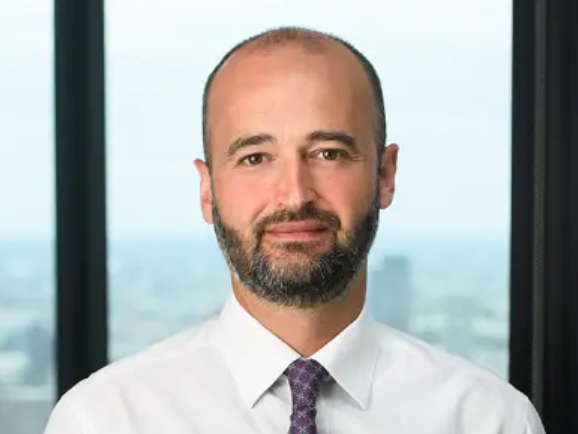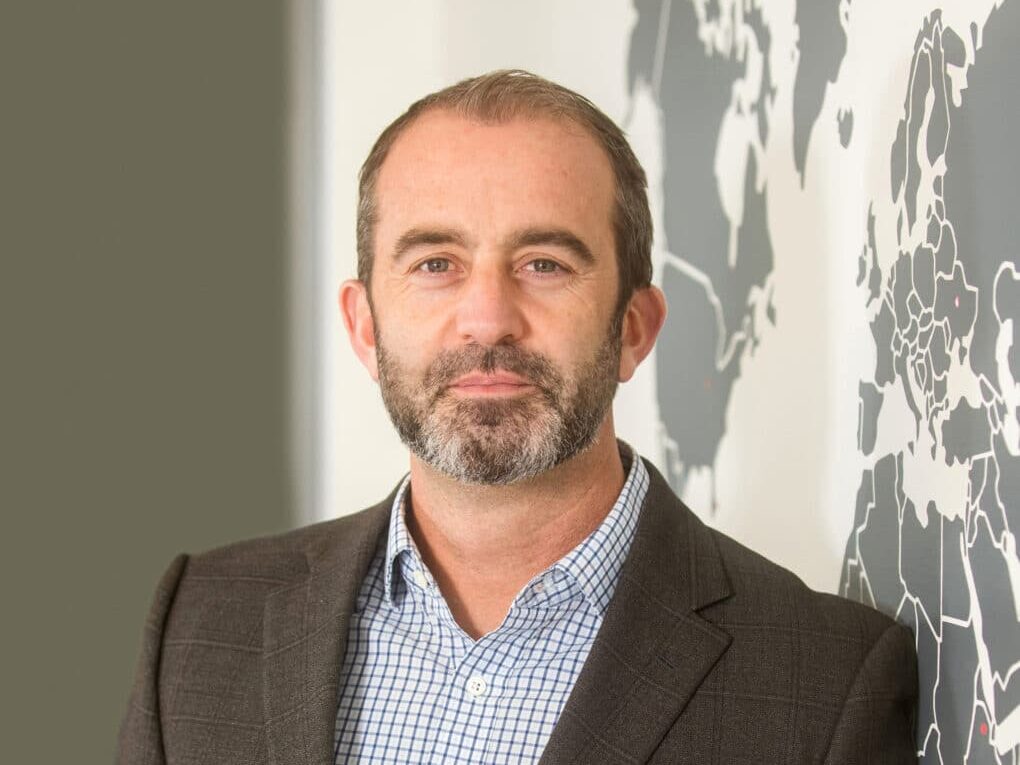
Steve Parker, Director General of the British International Freight Association (BIFA), explains why freight forwarding has never been more important and how the industry is adapting to the complex global trading environment.
At Multimodal 2026, our Editor, Bethany Kellock, sat down with Steve Parker, Director General of the British International Freight Association (BIFA), to discuss the pressures, opportunities and structural changes shaping freight forwarding and international trade.
BIFA represents around 1,700 freight forwarding and customs brokerage businesses, alongside approximately 100 associate members providing services to the sector. Its membership reflects the breadth of modern logistics, ranging from major international operators to family run businesses. With around 1,000 members employing fewer than ten people, SMEs form an important part of the community BIFA represents.
That diversity matters at a time when international logistics continues to contend with disruption. Brexit transformed customs requirements for UK and European trade, while the pandemic demonstrated how quickly interruptions to freight networks can affect manufacturers, retailers and consumers. More recently, instability in the Middle East has placed further pressure on shipping routes and global supply chains.
BIFA also supports the industry through representation, training and professional development. Its work includes engaging with government, promoting the interests of freight forwarders and helping members navigate changes affecting international trade and customs. Through its connection with the wider international freight forwarding community, BIFA also helps ensure that the interests of UK freight businesses form part of broader conversations surrounding global trade.
Alongside representation, developing skills remains an important part of BIFA’s role. Its training provision supports employees across member businesses, while its work with colleges and the Young Forwarding Network aims to increase awareness of the range of careers available throughout freight, customs, logistics and the wider supply chain.
Please introduce yourself and who BIFA are.
I’m Steve Parker, Director General at BIFA. We are a trade association for international freight forwarders and customs brokers.
We have around 1700 members and about 100 associate members, from people who supply goods to us, to people like software suppliers and insurance brokers. Out of 1700 members, at least 1000 of them are made up of less than 10 people.
So, we have a huge amount of SME, family-run, and small companies who have a niche in the market where they move freight to either one or two customers or even one or two destinations.
We also have larger companies including companies such as DHL and UPS. We have a long list of people that we look after.
How does BIFA work with the freight forwarding community internationally?
All of our members will send freight internationally and they’ll either have other offices overseas or they’ll have a partner. There is a global organisation called FIATA International Federation of Freight Forwarders Associations who connect all of those global countries together. They represent our industry on the global scale for example, by going to meeting with the UN.
For our members here in the UK, we are making sure they’ve got all that they need. BIFA are lobbying government and raising our profile to promote our industry around the world. Of course, this has been easier in the most recent years due to Brexit and the pandemic. Our industry was all of a sudden discussed at every board meeting because it was causing their businesses problems.
What has been the biggest change to the industry following Brexit and Covid?
The biggest change of recent is everything that came in response to Brexit. All the freight that used to come from the EU without any issues previously, all of a sudden needed customs clearance and paperwork at the border. We’ve seen members and businesses come and go as a result of that because the cost of doing business in this new environment is too expensive so therefore, they’ve not survived.
Others, of course, have benefited, that’s just the way these things are.
Lately, it’s been about the Middle East and Iran and not being able to send freight, ocean freight particularly, into the Middle East and out again. Global trade is just a big hub and everything tends to go to the Middle East and then come out again to different parts of the world. Not being able to access that has been a big issue for our members.
How has the conflict in the Middle East affected freight forwarding?
Our members are resilient, so if you can’t send it one way, they’ll find another. Somebody said to me the other day, trade is like water, it finds a way. that’s exactly what happens.
Our members have been continuing to get their products to market in all of these places, even with everything going on.
How have global disruptions changed the role of freight forwarding?
It’s not so much the market, it’s the network. People here will ship to the US, Australia or China and it’s those global freight networks that make it all work. When those networks are disrupted, everything stops.
We’ve had members who have had containers end up, just before the war started, get stuck there. That is what the war is doing.
It does, however, raise the profile of our industry. In my previous role, I would visit warehouse and customs managers to discuss freight and customs issues. However, during Brexit and the pandemic, I would talk to the boardroom because the disruption was affecting entire businesses.
All of a sudden, businesses couldn’t get freight in, they couldn’t get freight out, they couldn’t get the parts they needed to manufacture or the food products they relied on. That’s when everyone realised just how important our industry is.
BIFA’s role now is to keep it that elevation. Keep it in the format, keep our industry in the mind of government and in the mind of big companies. Because, without us, nothing moves.
How is BIFA helping to develop the next generation of freight forwarding professionals?
Training is a big part of what we do. If you’re a member of BIFA, it means that all staff can access training as part of their membership. It’s all included.
The training can also be completed in chunks so can be taken as and when. Our Young Forwarding Network asked if the training could be produced in half an hour chunks so they could do it in their lunchbreaks, and we did exactly that.
Our training starts at Level 2, which is equivalent to GCSE’s, and it is also accredited by a recognised accreditation body.
Our industry needs to remain professional, improve its reputation and be seen to be doing the right things, and training is a very key part of that to move the industry forward.
We also work with colleges, particularly around supply chain ports. Southampton is a good example as their college runs a logistics course, and we deliver part of the training. When the college was inspected by Ofsted, we were mentioned in their report.
When people think about our industry, they often think of driving a lorry, but it’s much more than that. I tell them, we need accountants, HR, catering and anything else that any other business would need, we need too. Driving the lorry is the end result. There is a whole range of careers that keep the industry moving.