Tim Waples, Director the FLTA and Chief Executive of UKMHA talks to International Trade Magazine about the role of a new authoritative body for material handling and what the industry can expect next
FLTA has recently joined forces with BITA to create the UK Material Handling Association, how will this benefit the industry?
By uniting the roles of FLTA and the BITA under the umbrella of one association, we can strengthen the offering of our organisations and enhance the services and deliverables we provide to every member, as well as those who own and operate forklift trucks.
UKMHA will also provide a single, authoritative voice, able to speak out on the key issues affecting the material handling sector.
By tapping into BITA’s strength in lobbying government, the new association will be able to petition more effectively on behalf of its members, thereby raising the profile of the industry with important legislative bodies.
These aims are embodied within UKMHA’s code of practice and its ethos: Lifting Standards Together.
FLTA provides training and advice, how are you helping guide members at this time?
The FLTA has always been a source of information to the sector, but when the pandemic began it was clear that all those involved in material handling required clear guidance and support, be they members who manufacture and supply equipment, or owners and users of lift trucks. In response, the FLTA created the COVID-19 Resource Centre, which remains available and contains free resources on subjects including furlough, equipment cleaning, HR, and COVID-secure operations.
FLTA members also have access to helplines for HR, legal, tax and H&S matters, and we offer libraries of information in the form of technical bulletins, factsheets, and newsletters to ensure that members stay up-to-date on best practice and regulations.
We recently launched our new website which features a Knowledge Hub, where anyone can find answers to FAQs on a number of subjects, such as Thorough Examinations, fleet management, and maintenance.
How do you think the industry has tackled the Covid-19 crisis?
When the pandemic began, the material handling industry faced surging demand and equipment was suddenly relied upon more than ever before. But this only spurred many operations to adapt quickly to new and ever-changing circumstances.
There are aspects of material handling where services must always be available in order to keep things running. For example, many organisations continued to offer urgent services, conduct repairs and carry out mandatory inspections such as Thorough Examinations, all to ensure that equipment remained safe to use. These companies developed COVID-secure ways of working and put procedures in place almost immediately, as closing was not an option. In this respect, material handling has proven to be extremely resilient, and all those who have played a part in helping businesses stay open and productive should be justifiably proud. Ours is an industry that operates quietly but dependably in the background, and the fact that it continued to strongly support the nation is testament to its ability to keep calm and carry on.
With the shift to remote working, do you think e-learning and digital training will continue post-covid?
Within material handling, training almost always requires some element of hands-on learning as delegates have to be able to competently and confidently work on trucks. Instructors therefore need to be able to properly assess their skills and this can only really be done in person.
That said, the theory side of training lends itself well to remote working. The FLTA runs several training courses in conjunction with F-TEC, the industry’s dedicated training facility in Swindon, and they did a great job at creating new online processes and platforms in order to continue to provide aspects of training during the pandemic.
We may never return to purely face-to-face courses, and given that remote learning has proven to be so successful it would make sense for it to remain as an available option.
Do you think the industry is prepared and responding well to Brexit?
As is probably the case with many industries, the material handling sector was as prepared as possible. But given that regulations are far from standardised, it does make the job of answering incoming queries problematic.
The FLTA receives a lot of questions about VAT, duty and commodity codes but these are far from standardised and each individual case can require specialist knowledge. The problem is most pressing for occasional importers, who are faced with either paying for customs intermediary services, or paying VAT and duty costs. For example, where a part was manufactured, and whether the UK has trade deals with that country, all affect the rules and procedures. Simplification and clarification are certainly needed.
With the new year which trends do you think will continue into 2021?
In 2020 demand for forklift and warehouse trucks fell by 24% compared sales in 2019, but it was actually less than we expected. The most recent lockdown had much less of an impact than the first and the FLTA sees good potential for the market to recover during 2021.
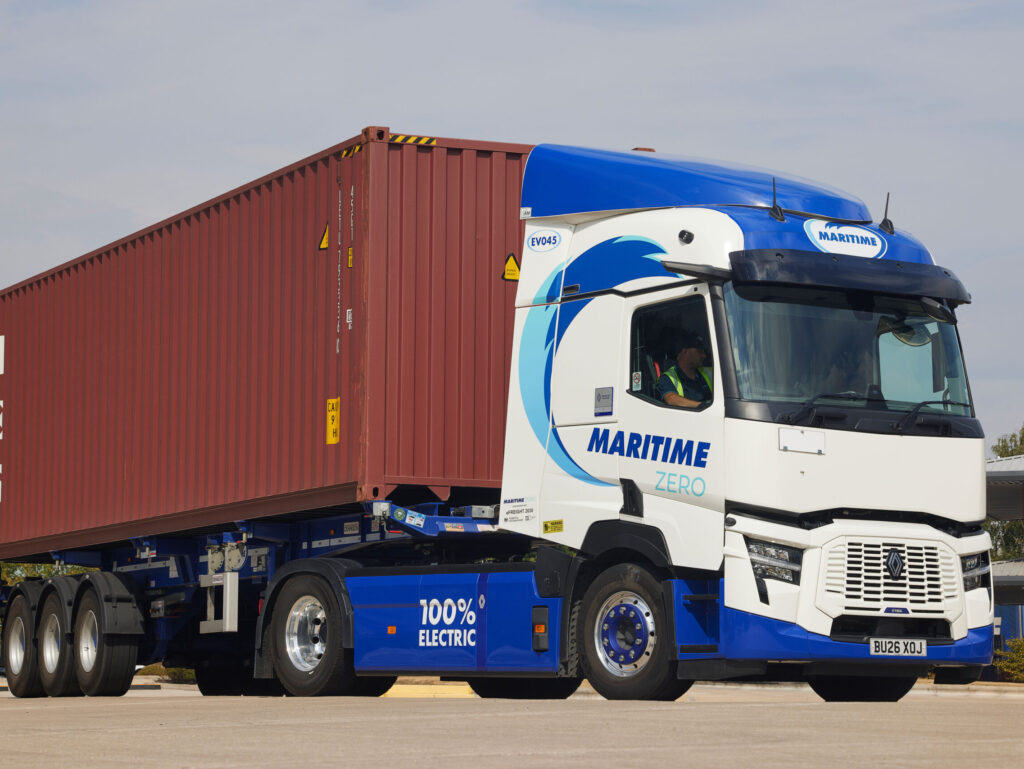
We are already seeing a rise in the sale of electric trucks, mirroring trends in the automotive sector. There are environmental reasons, as electric has low to no emissions compared to LPG or diesel-powered lift trucks which have long been the preferred forms of motive power. Electric trucks also have significantly lower whole-life running costs. Plus, they can now work outdoors in any weather and handle much heavier loads, formerly the province of IC engine trucks.
The shape and size of vehicles is even evolving, with new models being designed to accommodate smaller lithium-ion batteries, leading to more compact or differently configured trucks.
Automation is also an ongoing trend, and has been used in large distribution centres for some time. But the demand for operator-driven forklifts, stackers and power pallet trucks will remain high, as they are crucial for countless operations where loads, environments and work patterns are varied.
To stay up to date on the latest, trends, innovations, people news and company updates within the global trade and logistics market please register to receive our newsletter here.
Media contact
Rebecca Morpeth Spayne,
Editor, International Trade Magazine
Tel: +44 (0) 1622 823 922
Email: [email protected]