
Speakers at the Chartered Institute of Logistics and Transport South Africa‘s ESG Conference urged logistics, transport and supply chain leaders to move beyond ESG compliance. They called for organisations to measure leadership, skills development and community impact across the value chain.
Keynote Sets the Tone
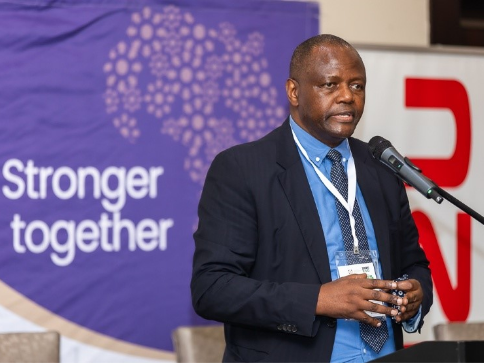
Dr Andile Sangqu, Chairperson of Transnet SOC Limited, delivered the keynote address. In his speech, he said ESG could no longer serve as a reporting exercise. He urged the sector to respond with honesty, leadership and accountability. There was also emphasis for leaders to prioritise communities that experience the impact of logistics decisions.
“A supply chain that takes value from a community without reinvesting in it is putting its own future at risk. We cannot build a strong logistics network on top of struggling communities,” he said.
Dr Sangqu urged delegates to see skills as a sovereign asset and build capability at every level of the supply chain. He noted that South Africa has much of the required knowledge in its universities, technical colleges, industry bodies and development finance institutions, as well as experienced logistics professionals.
“The skills gap in our sector is central,” he stressed. “If we don’t close it before 2030, we will end up with excellent strategies and no capacity to deliver them.”
CILTSA President Elvin Harris commented, “Dr Sangqu reminded us that ESG is a leadership responsibility. The quality of conversation and calibre of people here shows how seriously South Africa’s logistics community is taking that responsibility.”
Panel Discussions Provide Rich Insights
The Funding Panel, facilitated by DP World’s Lauren Rota, explored the tension between green finance availability and the realities facing logistics operators. In particular, the panel discussed SMEs navigating thin margins and complex reporting requirements. Panellists included Bernard Vilakazi from Absa; Sashen Singh from Nedbank Limited; Neo Molomo from the Industrial Development Corporation; Shaheed Alli from the Development Bank of Southern Africa and Jonathan McDonald from the South African Freight and Logistics Association.
The panel agreed that green financing must be integrated into mainstream financial products. They also discusses that development finance institutions must signal growth potential by backing early-stage transitions.
Liesl de Wet from the Road Freight Association‘s Green Transport Working Group moderated the Talent Panel. She argued that organisations should embed ESG capability across their culture, rather than rely on a few specialists with formal qualifications. Input came from Associate Professor Rose Luke from the University of Johannesburg; Chantal Kading from People Shop; Maphefo Anno-Frempong, CEO of the Transport Education and Training Authority (TETA); Aimee Girdwood of Stories Evolved and Sandile Khoza from the Ethekwini Maritime Cluster.
Maphefo Anno-Frempong highlighted the need for industry to collaborate directly with TVETs aligned to local economic activity. Meanwhile, Girdwood said visible leadership support is the starting point for meaningful ESG integration.
Commitment in Action
Michelle van den Berg from Takealot Fulfilment Solutions detailed the company’s fleet electrification efforts. She advised anyone considering a similar transition to, “start small, move on data and do not treat the transition as plug-and-play.”
Fundiswa Mahlanyana from Isuzu Motors South Africa said Africa’s transition pathway must be phased and grounded in local realities.
“We need to start with internal efficiencies, deploy technology that fits routes, and invest when the system is ready,” she said.
The conference also featured a presentation on efficiency and sustainability by Renko Bergh from CtrlFleet. Isuzu Motors South Africa, Ctrack Africa, the IMM Graduate School, CtrlFleet and Chery sponsored the conference.