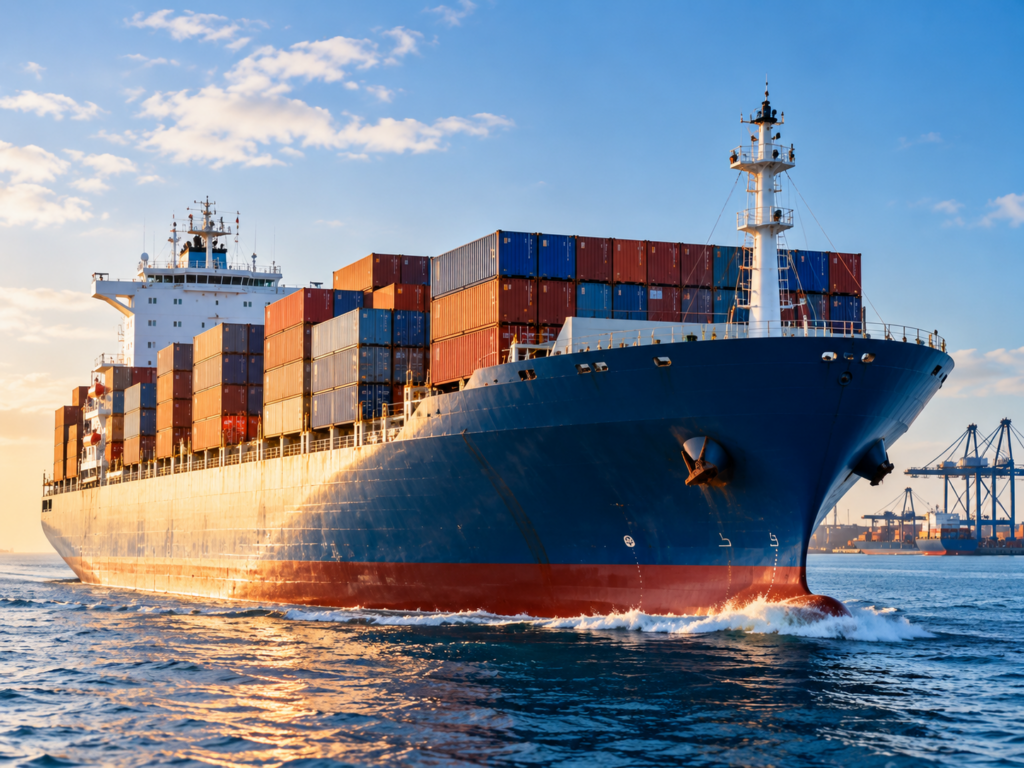

Recent analysis of the Containers Lost at Sea Report 2026 by Cleveland Containers has uncovered an increase in lost cargo compared to the previous 12 months.
1,478 containers were lost at sea in 2025, a rise from the 576 containers that went missing in 2024. That represents around 0.0005% of the 280 million of containers shipped worldwide last year.
As major shipping routes continue to be disrupted, improved measures are being put in place.
What’s Driving the Rise of Lost Cargo?
640 of the containers lost in 2025 came from a single incident off the coast of India. This represents over 43% of the total cargo lost last year. This suggests that the rise from 2024’s figures may not specifically point to any systemic failures in cargo shipping.
Key reasons for other cargo loss in 2025 included weather conditions and fire-related on-ship incidents. Particularly in the North Atlantic and North Pacific, conditions were regularly less predictable and more severe throughout 2025.
Weather had been largely to blame in 2025. However, 2026 figures are expected to rise due to the disruption to major routes around the Middle East in the early months of 2026. Richard Gray, Chief Operations and Commercial Officer at Cleveland Containers, part of Cleveland Group, highlighted the risk to cargo with ships stranded in open water for longer periods of time.
“Ships are out on the water for weeks or even months longer than their intended route due to incidents such as the Strait of Hormuz closure,” he said. “This extra time means more chances of running into adverse weather. It also increases risk of having to take unplanned routes or seeing safety features break due to overuse. With all those factors, the cargo numbers in 2026 could easily rise again from the previous two years.”
Recent Lost Cargo Incidents in the UK
Around the UK, recent cargo losses in the last 12 months include incidents in the Isle of Wight, West Sussex and North Tyneside.
16 containers were lost on the coast of the Isle of Wight in December of 2025. A combination of stormy weather and poor securement led to the cargo loss. This resulted in containers and produce washing up on UK shorelines.
Two separate incidents occurred during Storm Goretti, leading to 24 total containers being lost in UK waters. Both incidents happened within hours of each other on the night of January 8th, 2026. Severe weather was again the main reason for the cargo overboard, with no other causes stated following an investigation.
Most recently, a collision between two ships at the Port of Tyne in North Tyneside led to a loss of two containers worth of cargo. A wind turbine installation vessel collided with a berthed container ship, ripping open a container that spilled into the River Tyne. As of August 2026, no official cause has been given for the collision.
How Lost Cargo Can Be Prevented in the Future
Whilst the amount of cargo lost at sea is still a remarkably small percentage of the total cargo shipped, improvements are always at the forefront of industry minds.
Lloyd’s Register rolled out a new suite of container stowage solutions in early 2026 to help reduce the loss of cargo. They claim their solutions can “maximise vessel capacity with increased stack heights without compromising safety.” They also state they can “reduce incidents and costly delays with proactive safety validation of parametric and synchronous rolling”.
Recovery measures are also being improved to make the recovery of lost cargo even quicker. As of January 1st, 2026, the International Maritime Organization (IMO), introduced mandatory reporting of lost containers measures. All containers of lost cargo must now be reported to nearby ships, the nearest coastal state and to a ship’s flag state, who will immediately notify the IMO.
IMO Regulations Continue to be Implemented
The IMO introduced a range of other regulations at the start of the year. Electronic inclinometers are now required to be implemented on new ships or bulk carriers of 3,000 gross tonnage or above. The inclinometers measure the ships roll motion data in real-time, helping to alert captains to potential loss of cargo.
To help reduce fires on board cargo ships, fuel suppliers will now have to sign a declaration before ships depart. This ensures that their fuel conforms to regulation SOLAS II.2/4.2.1.
“The new regulations brought in by the IMO can only be a positive sign for the industry,” said Gray. “There will always be losses of cargo on long-haul journeys. However, the ability to track them down and clean up the losses quickly should reduce the impact we have seen on UK shores.”