Stability for Northern Ireland

Northern Ireland

Share this article:

The Road Freight industry is consistently facing changes and having to adapt as policy changes throughout the world. From changing legislation to carbon neutral targets, the road freight industry is possibly one of the most impacted in the supply chain. Road freight activity by HGVs transporting freight internationally majorly decreased over 2021. In total there was 3.3 billion tonne kilometres of goods moved in total in 2021, which was down 39% compared to the 2015-2019 average. Of course, during the pandemic there was a dip in road freight activity due to uncertainty and supply chain issues, but even then, the rate of road freight activity was higher. A big cause of this decreased activity is due to the rise in petrol prices Europe saw in Q3, as well as demand for more drivers due to the decrease in drivers as a cause of Brexit. These were unable to be met and fixed in time, so Q3 of 2022 saw a softening of road freight activity.  

Even though the rate of road freight activity is down, there is still a stigma around the transportation type from the general public. This is possibly due to misinformation about the amount of carbon emissions caused by road freight, but road freight isn’t the biggest contributor to carbon emissions in the supply chain. By far, air freight produces the most carbon emissions, but as this form of transportation isn’t as visible to the general public, it isn’t as big of a concern. 

Seamus Leheny, Policy Manager – Northern Ireland, Logistics UK has written this exclusive article for International Trade Magazine, discussing the Northern Ireland Protocol and how this is impacting the road freight industry. Brexit has been impacting the entire industry since it was proposed. From concerns about how companies would survive the changes, to businesses ensuring they can continue trade, Brexit caused a lot of changes and has required the industry to adapt to this huge change. In this article, Leheny delves into the Northern Ireland Protocol, and what impacts this has on the future of the industry.  

Before Brexit was introduced, goods were able to be easily transported across borders linking Great Britain (GB) to Northern Ireland (NI) and NI to the Republic of Ireland (ROI). This was possible as all parties involved were part of the European Union (EU). Following the UK’s exit from the EU on 31 January 2020, the Northern Ireland Protocol was established as part of the Brexit withdrawal agreement to ensure that border checks are avoided within Ireland, both ROI and NI. The agreement, made between the UK, NI and the EU, was designed to protect both Ireland’s economy and the Good Friday Agreement in order to safeguard the integrity of the EU single market…

To read the rest of this exclusive article see our latest issue here

Never miss a story… Follow us on:

LinkedIn International Trade Magazine
Twitter logo @itm_magazine
Facebook @intrademagazine

Media Contact
Anna Wood
Editor, International Trade Magazine
Tel: +44 (0) 1622 823 922
Email: [email protected]

About Logistics Buyer

International Logistics Buyer is the leading authority in global logistics and supply chain content, delivering expert news, in depth articles, exclusive interviews, and industry insights across print, digital, and event platforms. Published 10 times a year, the magazine is a trusted resource for professionals seeking updates and analysis on the latest developments in the logistics sector.

To submit an article, or for sponsorship opportunities, please contact our team below.

Bethany Kellock Picture

Bethany Kellock

Editor

Mason Ponti Picture

Mason Ponti

Sales Manager

Afua Akoto Picture

Afua Akoto

Marketing Manager

Related News

Daniel Allin, Chief Product and Innovation Officer, Diamond Logistics proudly displays one of the two bronze ECommerce Awards logistics-buyer.com

Diamond Logistics lands double bronze

Diamond Logistics shines at the 2026 eCommerce Awards, winning two bronze awards for delivery excellence and support.
Maritime Transport logistics-buyer.com

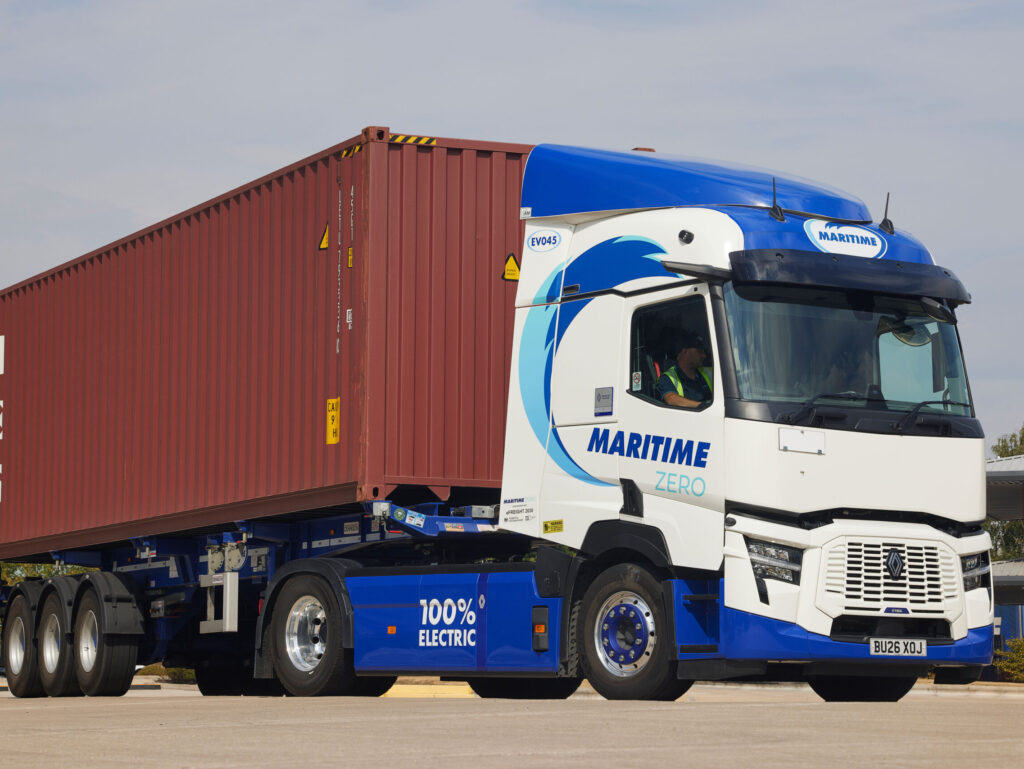
Maritime Transport deploys Renault Trucks E-Tech Ts

Maritime Transport embraces innovation with Renault Trucks E-Tech T to lead in zero-emission maritime transport solutions.
New, no waste RFID label printer logistics-buyer.com

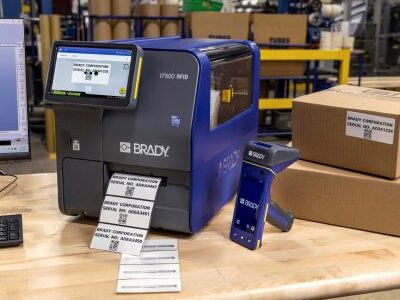
New, no waste RFID label printer

The Brady i7500 redefines RFID printing: print and encode labels right the first time, with no waste and automation.
ICS expands collection of free practical resources logistics-buyer.com

ICS expands collection of free practical resources

The International Chamber of Shipping (ICS) has expanded its range of free resources available to the global maritime community.
Ocean Network Express Strengthens its Regional Structure in Asia Pacific and Africa logistics-buyer.com

ONE strengthens its regional structure

ONE announces key changes to its regional headquarters structure, enhancing decision making and operations across 15 markets.
Steve Smith, CEO at AfA logistics-buyer.com

AfA appoints new CEO

The Airforwarders Association has appointed Steve Smith as CEO, bringing extensive experience in aviation and logistics to AfA.
BIFA puts efficient trade at the heart of Labour Party Conference agenda logistics-buyer.com

BIFA focus on efficient trade at Labour Party Conference

BIFA hosted a significant discussion on UK trading borders, focusing on policy needs for secure and efficient trade.
Evri trials two-legged delivery robot logisitcs-buyer.com

Evri trials two-legged delivery robot

Evri introduces a two-legged robot for parcel delivery in Barnsley, designed to tackle obstacles and support courier operations effectively.
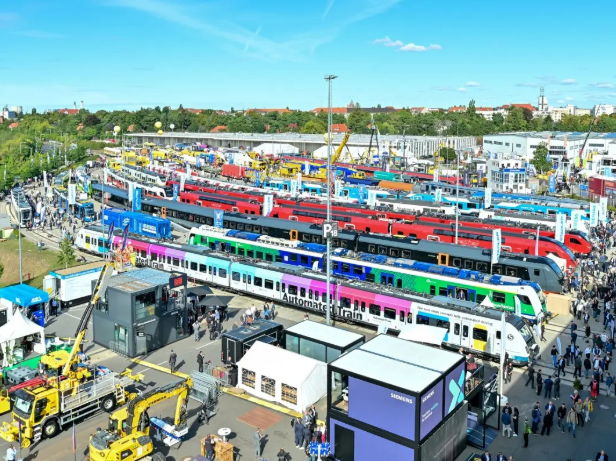
With 113 vehicles on display, the outdoor exhibition area was one of the highlights of InnoTrans 2026 logisitcs-buyer.com

InnoTrans 2026 sets attendance record

InnoTrans 2026 attracted global attention, showcasing new trends in rail freight and digital technology for logistics operators.
Cargo bikes logistics-buyer.com

Cargo bike use rockets in London

Cargo bikes are reshaping urban logistics in London, promoting efficiency while addressing the city’s diesel pollution problems.
Scroll to Top