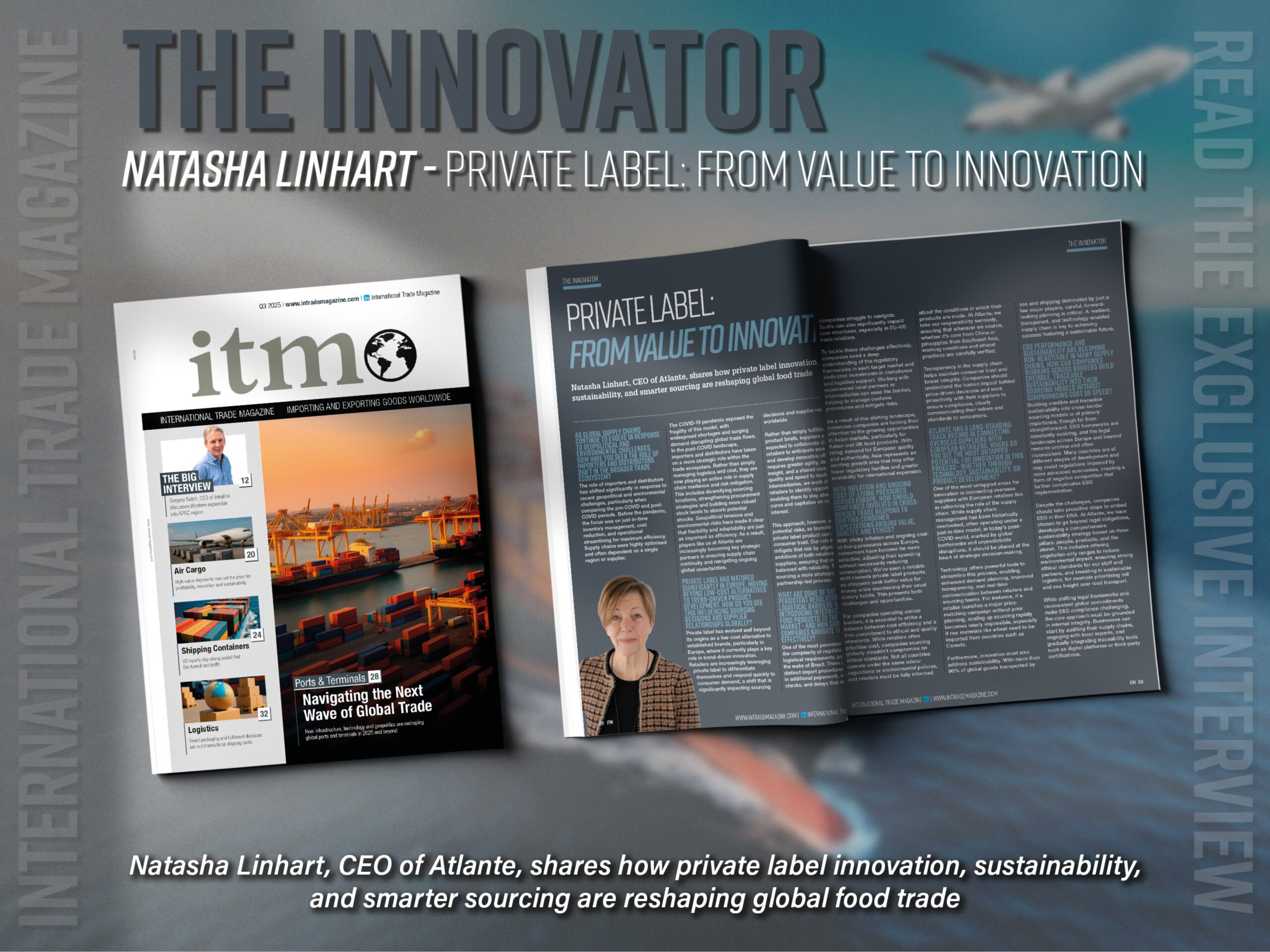

Natasha Linhart, CEO of Atlante, shares how private label innovation, sustainability, and smarter sourcing are reshaping global food trade
As global supply chains continue to evolve in response to geopolitical and environmental challenges, how have you seen the role of importers and distributors shift in the broader trade ecosystem?
The role of importers and distributors has shifted significantly in response to recent geopolitical and environmental challenges, particularly when comparing the pre-COVID and post-COVID periods. Before the pandemic, the focus was on just-in-time inventory management, cost reduction, and operational streamlining for maximum efficiency. Supply chains were highly optimised and often dependent on a single region or supplier.
The COVID-19 pandemic exposed the fragility of this model, with widespread shortages and surging demand disrupting global trade flows. In the post-COVID landscape, importers and distributors have taken on a more strategic role within the trade ecosystem. Rather than simply managing logistics and cost, they are now playing an active role in supply chain resilience and risk mitigation. This includes diversifying sourcing locations, strengthening procurement strategies and building more robust stock levels to absorb potential shocks. Geopolitical tensions and environmental risks have made it clear that flexibility and adaptability are just as important as efficiency. As a result, players like us at Atlante are increasingly becoming key strategic partners in ensuring supply chain continuity and navigating ongoing global uncertainties.
Private label has matured significantly in Europe, moving beyond low-cost alternatives to trend-driven product development. How do you see this influencing sourcing decisions and supplier relationships globally?
Private label has evolved well beyond its origins as a low-cost alternative to established brands, particularly in Europe, where it currently plays a key role in trend-driven innovation. Retailers are increasingly leveraging private label to differentiate themselves and respond quickly to consumer demand, a shift that is significantly impacting sourcing decisions and supplier relationships worldwide.
Rather than simply fulfilling existing product briefs, suppliers are now expected to collaborate closely with retailers to anticipate emerging trends and develop innovative offerings. This requires greater agility, deeper market insight, and a shared commitment to quality and speed to market. As intermediaries, we work closely with retailers to identify opportunities early, enabling them to stay ahead of the curve and capitalise on consumer interest.
This approach, however, also carries potential risks, as launching the wrong private label product can erode consumer trust. Our role is to help mitigate that risk by aligning the ambitions of both retailers and suppliers, ensuring that innovation is balanced with reliability. This makes sourcing a more strategic, partnership-led process.
What are some of the most persistent regulatory or logistical barriers when introducing international food products to the European market – and how can companies navigate them more effectively?
One of the most persistent barriers is the complexity of regulatory and logistical requirements, particularly in the wake of Brexit. There are now distinct import procedures, resulting in additional paperwork, customs checks, and delays that many companies struggle to navigate. Tariffs can also significantly impact cost structures, especially in EU-US trade relations.
To tackle these challenges effectively, companies need a deep understanding of the regulatory frameworks in each target market and dedicated investments in compliance and logistics support. Working with experienced local partners or intermediaries can ease the burden, helping to manage customs procedures and mitigate risks.
As a result of this shifting landscape, numerous companies are turning their attention to the growing opportunities in Asian markets, particularly for Italian and UK food products. With rising demand for European quality and authenticity, Asia represents an exciting growth area that may offer fewer regulatory hurdles and greater scalability for international expansion.
Never miss a story… Follow us on:
International Trade Magazine
@itm_magazine
@intrademagazine
Media Contact
Editor, International Trade Magazine
Tel: +44 (0) 1622 823 920
Email: [email protected]