
Retailers need to maintain efficient returns systems in their warehouses to retain customers, maximise margins and remain competitive, says Edward Hutchison, Managing Director of BITO Storage Systems.
Returning goods has become as an established part of shopping as buying them, since being accelerated during the era of growth in online shopping, where goods are purchased without being tried. The free returns promise carried over to all retail channels, including the high street, and has created a situation in this ultra-competitive sector where the unconditional invitation of free return of goods has become enshrined. Returns being limited only to occasions when a retailer failed to match customer expectation has become a distant memory.
This has led to an evolution in shopping habits where consumers, taking free returns for granted, purchase multiple sizes or varieties in the knowledge that they can be returned at no cost. This practice is felt acutely in fashion retail, where shoppers are now accustomed to buying clothing and shoes in a variety of sizes in the knowledge that they will send back any unwanted items.
This can be clearly seen in the returns of online purchases by category in the UK in 2022, as shown by Statista Global Consumer Survey published in May of this year. It asked: ‘Which of these kinds of articles have you sent back after an online order in the past 12 months? Clothing topped the list of items people shop for by far, with almost a third of purchases returned (32%). Shoes come next (15%). All other categories follow some way behind, being evenly distributed between 3% and 8% – though 51% said they didn’t send anything back.
However, there is of course a cost to processing a return and this is leading some retailers to question the economics of free returns and to consider invoking a charge for customers. Such thoughts may not go down well with consumers, some 89% of who identify ease of returns as their top priority when purchasing online, according to data from delivery experience platform Sorted. Research from market researcher Appinio found that 71% of UK consumers would avoid shopping online if they were required to pay to return the items. It will be interesting to see what happens. But irrespective of whether a charge is imposed or not, returns still need to be processed with maximum efficiency.
Indeed, dealing with a return correctly does provide the retailer with an opportunity for positive customer sentiment, potentially increasing customer loyalty and to gain customer advocacy. Having a low-cost, simple yet effective and above all efficient returns processing pathway, will allow returned goods to be placed back on sale as quickly as possible.
The logistics sector has developed solutions to help returned goods to be processed as quickly as possible to gain the maximum value through reintroducing the goods back into stock. For many retailers now, returns are a large and important element of their inventory.
This makes the selection of the appropriate shelving system, container transport, picking methods, as well as the complete internal warehouse processes, a vital factor for an efficient returns system.
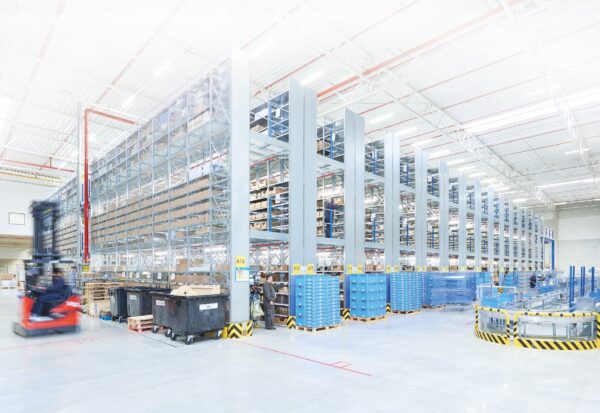
BITO provides many products and solutions that contribute to this aim. For example, pallet racking can be configured with a single pallet bay level and shelving above to provide locations for unpalletised ‘returned to stock’ items.
When using BITO’s galvanised shelving for returned items, dividers can be placed on a shelf to help organise stock simply. They can be easily moved to change the size of compartments and can clearly identify new products, for example, at a glance or separate product lines or returns.
To speed the movement of returned goods back to stock, a driverless container transporter, such as the LEO Locative from BITO, makes a smart addition to a warehouses. It helps to reduce travel times for returns as well as other tasks.
Proactive action to reduce returns can be instigated by retailers handling large numbers of items. Deploying order picking systems with minimal error rates will reduce picking errors in e-commerce. This will not only result in higher customer service levels, but will also help to eliminate incorrect orders in fulfilment as a cause of returns.
A sophisticated and highly efficient returns processing system is critical to success in many sectors and can be decisive for a business’ profitability. BITO distribution systems massively optimise order and returns logistics, improving online retailers’ competitiveness. They meet the e-commerce sector’s current demands for flexibility, speed and maximum accuracy. As a result, logistics specialists can optimise goods flow and organise returns logistics so that returned products promptly show back up in the system.
To read more news and exclusive features see our latest issue here
Never miss a story… Follow us on:
 International Trade Magazine
 @itm_magazine
 @intrademagazine
Media Contact
Anna Wood
Editor, International Trade Magazine
Tel: +44 (0) 1622 823 922
Email: [email protected]