
The next generation of logistics is being built on connected intelligence, where AI, robotics and automation work together to create smarter, more resilient supply chains. Reports Katie Tracy.
Automation has long been associated with logistics. Conveyor systems, automated storage, barcode scanning and warehouse management software have steadily transformed the movement of goods, yet the industry is entering a distinctly different phase of technological development. Today’s investments are no longer focused solely on replacing manual processes. Instead, organisations are creating connected ecosystems where artificial intelligence, robotics, automation and real time data work together to support every operational decision.
The distinction is an important one. Traditional automation follows predefined instructions. Intelligent automation continuously analyses changing conditions before adapting its response. It can recognise patterns, predict disruption and optimise operations without requiring constant human intervention. In an environment where labour shortages, volatile freight markets and increasing customer expectations have become everyday challenges, this capability is becoming essential.
The modern warehouse offers perhaps the clearest illustration of this shift. Rather than viewing automated storage, autonomous mobile robots, warehouse software and inventory systems as separate technologies, operators are integrating them into unified platforms capable of responding dynamically to changing demand. Artificial intelligence provides the intelligence layer that coordinates these technologies, ensuring that inventory, labour, transport and fulfilment remain synchronised throughout the day.
The same philosophy is spreading beyond warehouse walls. Every stage of the logistics journey is becoming more intelligent because every stage is becoming more connected.
Success is no longer determined by who owns the largest warehouse or the fastest vehicles. Competitive advantage depends upon who can collect, interpret and act upon information most effectively.
Artificial intelligence becomes the operational brain
Artificial intelligence often attracts attention for its most visible applications, from conversational software to image generation. Within logistics, however, its greatest value lies behind the scenes.
Every logistics operation generates enormous quantities of data. Orders are received, vehicles depart, stock levels fluctuate, customer priorities change and transport networks experience continual disruption. Historically, much of this information remained fragmented across different software platforms, making rapid decision making difficult.
AI changes that dynamic by analysing multiple data streams simultaneously and identifying relationships that would be almost impossible for human planners to detect in real time.
Warehouse management systems can now predict congestion before it develops, adjusting picking priorities or reallocating labour accordingly. Transport management platforms continuously evaluate traffic conditions, delivery windows and vehicle availability to optimise routes throughout the working day. Demand forecasting models combine historical purchasing patterns with live commercial information to improve inventory planning while reducing unnecessary stockholding.
This evolution reflects a broader change in how logistics software is designed. Rather than simply recording what has happened, modern platforms are now apprehending what should happen next.
The aviation sector offers a particularly strong example of this transformation. International air cargo depends upon constant coordination between airlines, freight forwarders, handlers, customs authorities and customers. Even relatively minor communication delays can quickly affect capacity utilisation and delivery schedules.
Digital platforms developed by companies such as Awery Aviation Software illustrate how AI is helping simplify this complexity. By integrating operational, commercial and financial information within a single environment, airlines and cargo operators gain greater visibility across their entire operation while reducing repetitive administrative processes. The technology itself may be sophisticated, but its objective remains the same, to provide better information to support faster and more confident decision making.
AI is becoming less about replacing operational expertise and more about strengthening it. Experienced logistics professionals remain responsible for strategic decisions, but they now have access to systems capable of analysing thousands of variables in seconds rather than hours.
Software as warehouse management
If automation defined the warehouse of the previous decade, software is defining the warehouse of the next.
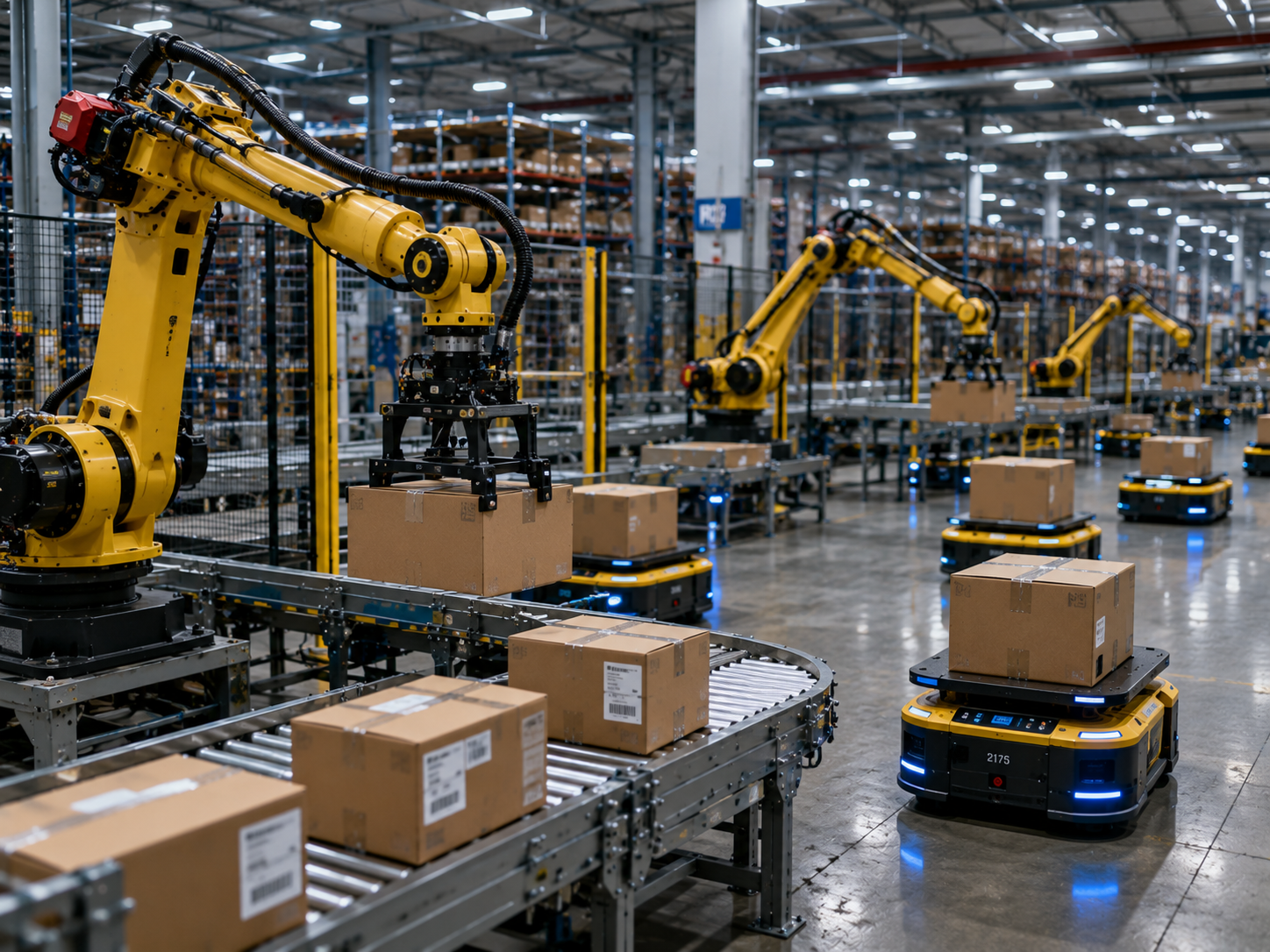
Modern fulfilment centres contain an extraordinary range of technologies. Autonomous mobile robots transport goods between workstations. Automated storage systems retrieve inventory from high density locations. Conveyors move products across multiple processing areas, while robotic arms support picking, palletising and packaging.
Yet none of these technologies delivers maximum value independently. Warehouse efficiency depends upon the intelligence coordinating every movement rather than the machinery performing it.
This has given rise to warehouse execution systems that sit between warehouse management software and physical automation, continuously balancing workloads, prioritising orders and directing equipment according to live operational conditions. Rather than operating individual machines, warehouse managers are now supervising digital ecosystems.
Companies including KNAPP have been at the forefront of this transition, developing integrated intralogistics platforms where robotics, automated storage technologies and software operate as a single coordinated solution. Goods to person systems, intelligent order fulfilment and autonomous transport technologies all rely upon sophisticated software capable of orchestrating thousands of simultaneous activities throughout the warehouse.
Similarly, Swisslog has continued to develop automation platforms that combine robotics with advanced operational analytics. Every inventory movement, robot journey and equipment cycle generates data that can be analysed to improve productivity, identify bottlenecks and support predictive maintenance.
This represents an important shift in thinking. Warehouses are no longer measured solely by the speed of individual machines but by how effectively every system communicates with every other system.
Beyond repetitive automation
The image of industrial robotics has traditionally centred on fixed machines repeating identical movements inside manufacturing plants. Logistics has taken robotics in a different direction.
Today’s warehouse robots are expected to navigate dynamic environments, avoid obstacles, collaborate safely with people and adapt to constantly changing operational priorities. AI has become fundamental to enabling these capabilities.
Autonomous mobile robots now use advanced navigation technologies to calculate optimal routes throughout busy warehouses while responding instantly to changing traffic conditions. Machine vision enables robotic systems to recognise products with increasing accuracy, while intelligent scheduling software allocates tasks according to priority, battery capacity and operational workload.
The result is a level of flexibility that conventional automation could rarely achieve.
This flexibility is particularly valuable because few logistics operations remain static for long. Product ranges expand, customer expectations evolve and distribution networks are continually reconfigured. Businesses therefore require automation capable of evolving alongside operational requirements rather than becoming obsolete after a single process change.
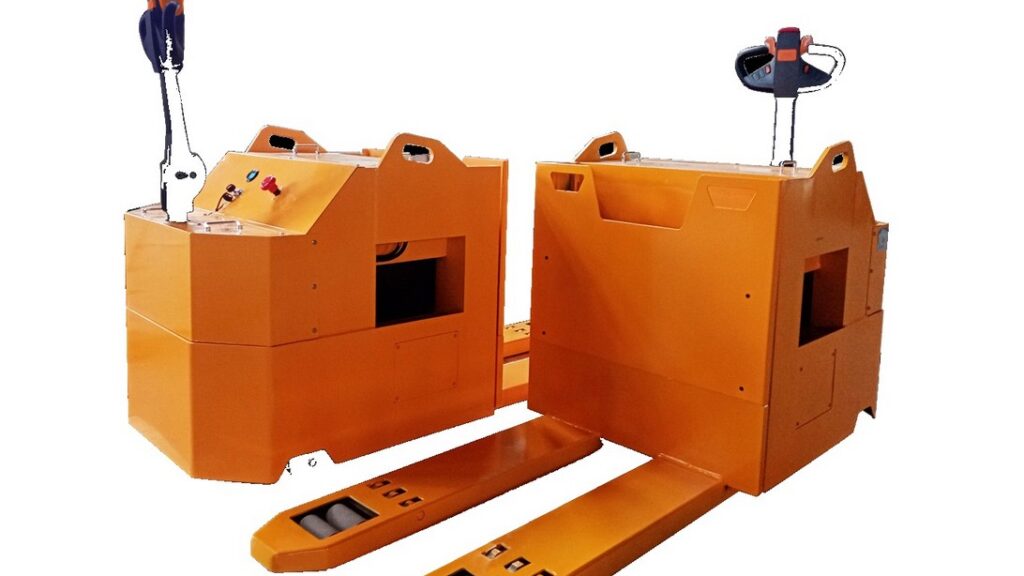
Toyota Automated Logistics reflects this collaborative approach to warehouse automation. Rather than positioning autonomous equipment as a complete replacement for conventional material handling, the emphasis has shifted towards creating mixed environments where automated vehicles, manual equipment and warehouse personnel work together within connected workflows.
This hybrid philosophy recognises an important reality. The industry remains fundamentally dependent upon human judgement, customer relationships and operational experience. Intelligent robotics enhances those capabilities by removing repetitive transport tasks, allowing skilled personnel to focus on higher value activities that require decision making, problem solving and customer interaction.
Connecting the supply chain
As intelligent warehouses become more common, attention is turning towards what happens outside the four walls. Goods rarely remain within a single facility for long. They move between suppliers, manufacturers, ports, airports, distribution centres and customers, often crossing multiple borders and involving numerous transport providers. If each stage of that journey operates in isolation, even the most advanced warehouse automation will struggle to deliver its full potential.
This is why connectivity has become one of the defining themes of modern logistics. Businesses are investing in digital platforms that allow information to move as efficiently as the products themselves, creating a continuous flow of operational intelligence across the wider supply chain.
Air cargo demonstrates this challenge particularly well. Airlines, ground handlers, freight forwarders, customs authorities and shippers all rely on accurate information being available at exactly the right time. Delays are not always caused by aircraft availability or warehouse congestion. They are just as likely to result from fragmented communication, incomplete documentation or a lack of visibility across multiple systems.
Digital platforms are helping to remove these barriers by connecting operational data into a single source of truth. As information flows more freely, organisations gain greater confidence in planning, scheduling and customer communication. The ability to make informed decisions quickly becomes just as valuable as physical infrastructure.
Asset visibility represents another important element of this connected ecosystem. Unit Load Devices, pallets and specialist air cargo containers are valuable operational assets that circulate continuously throughout global aviation networks. When their location or availability becomes uncertain, inefficiencies quickly emerge through unnecessary repositioning, delays or equipment shortages.
Companies such as ACL Airshop are responding by developing sophisticated digital asset management solutions that improve visibility across these global equipment pools. By combining tracking technologies with operational software, organisations gain a clearer understanding of where assets are located, how effectively they are being utilised and where capacity constraints may develop. This not only improves operational performance but also supports more sustainable resource management by reducing unnecessary equipment movements and extending asset life.
Data as a strategic asset
For many years, data was viewed primarily as a reporting tool. Performance metrics were collected after operations had been completed, allowing businesses to measure productivity, delivery performance or warehouse utilisation.
Today, data has assumed a far more strategic role. Rather than describing what has already happened, information is being used to influence what happens next. AI depends on reliable data to generate meaningful recommendations, while predictive analytics become more accurate as data quality improves. In this environment, access to trusted market intelligence can influence everything from procurement strategies to transport pricing and capacity planning.
Independent market data providers such as TAC Index have become incredibly important by offering transparent freight pricing benchmarks that support more consistent market analysis. Reliable indices enable businesses to compare market conditions, evaluate pricing trends and strengthen forecasting capabilities. When combined with AI driven analytical tools, this information allows organisations to move beyond reactive pricing towards more informed strategic planning.
Technology depending on people
Despite rapid advances in AI and robotics, logistics remains a people driven industry. Every successful automation project relies on operational knowledge, strategic oversight and workforce engagement.
This is perhaps one of the biggest misconceptions surrounding intelligent automation. Headlines often focus on machines replacing human labour, yet the reality within most logistics operations is considerably more balanced.
As repetitive physical tasks become increasingly automated, the demand for technical, analytical and supervisory skills continues to grow. Warehouse operatives become automation specialists. Maintenance engineers increasingly require software expertise alongside mechanical knowledge. Managers spend less time reacting to operational problems and more time interpreting performance data, planning continuous improvement and supporting strategic decision making.
Technology therefore changes the nature of logistics employment rather than removing the need for skilled professionals.
The next generation of logistics
Automation is no longer the destination. It is the foundation upon which the next generation of logistics is being built.
AI is connecting systems that once operated independently. Robotics is becoming increasingly adaptive rather than repetitive. Software is evolving from an administrative tool into the operational brain of warehouses and transport networks. Data is transforming from historical reporting into a strategic business asset that shapes future decisions.
Collectively, these developments point towards a logistics sector that is becoming progressively more intelligent, connected and resilient.
The companies contributing to this transformation, whether through digital aviation platforms, warehouse software, autonomous material handling, market intelligence or asset management, demonstrate that innovation no longer exists in isolated technologies. The greatest advances occur where systems communicate, where information flows freely and where physical automation is supported by intelligent decision making.