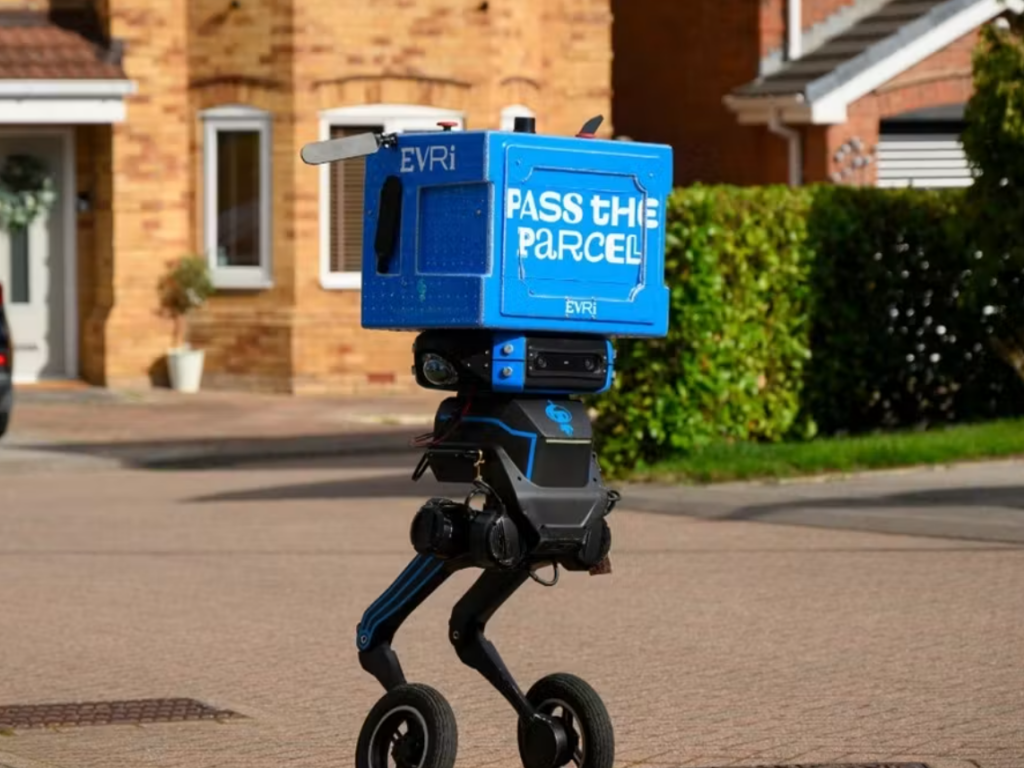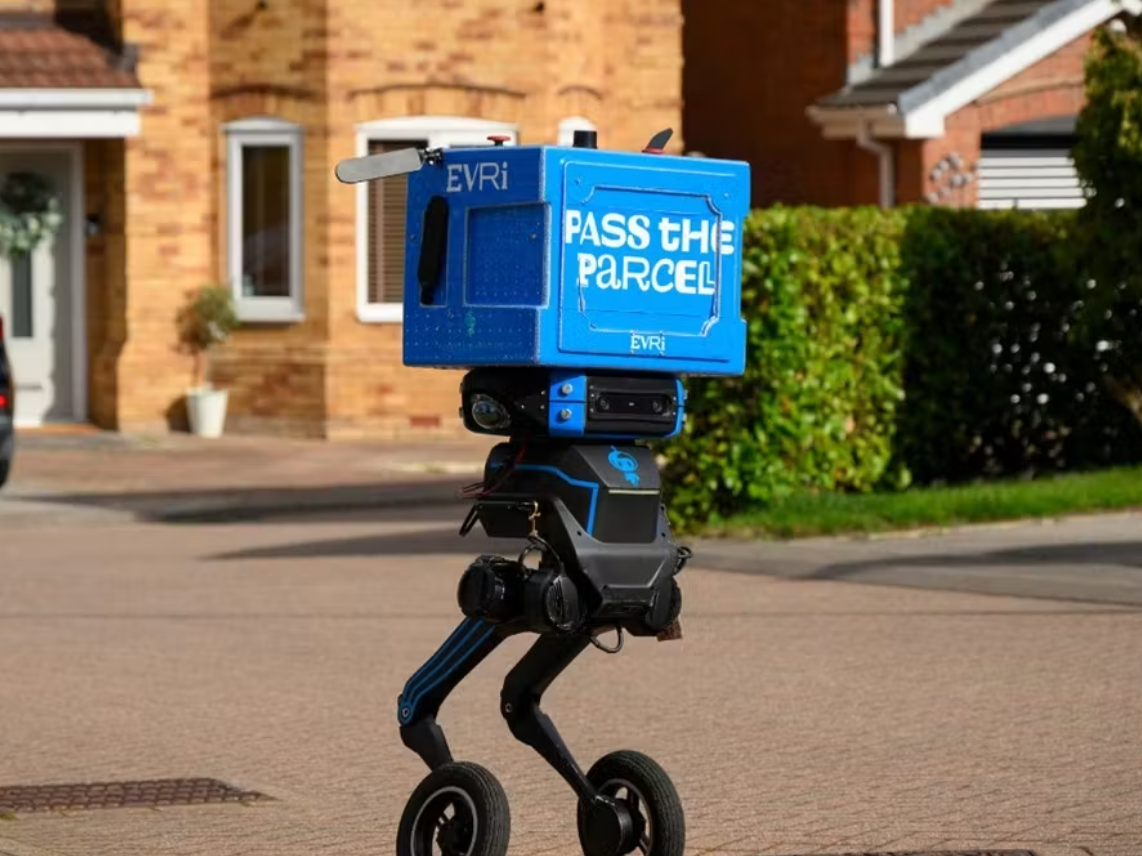

Evri has begun a trial of a two-legged autonomous delivery robot in Barnsley. The company is investigating whether robotics can support couriers during last-mile parcel operations.
The project is being conducted with Japan-based Refined Robotics and will test the technology in residential environments. Evri describes the project as Europe’s first trial of a two-legged autonomous delivery robot.
Rather than replacing the conventional delivery network, the pilot is intended to establish how robots could complement couriers and provide additional options for parcel delivery.
Built for difficult terrain
The robot’s two-legged design helps it tackle obstacles that conventional wheeled last-mile delivery platforms may struggle to navigate. It can travel between delivery vehicles and customers’ doors while navigating steps, kerbs and uneven surfaces.
According to Evri, it can climb stairs, cross uneven surfaces and move into and out of delivery vans. The machine can carry parcels weighing up to 15kg and has a maximum travel speed of 6km/h.
It can operate autonomously or under remote monitoring and has been designed to support both attended and unattended deliveries.
Those capabilities address an important limitation for autonomous last-mile systems. Pavement robots can operate effectively in relatively controlled environments. However, kerbs, steps and irregular access routes can restrict where purely wheeled platforms can travel.
The Barnsley trial will therefore provide Evri with operational data on how the different approach performs under everyday residential conditions.
Testing the last-mile case
Parcel carriers need to determine whether autonomous systems can deliver measurable productivity improvements when integrated with existing vehicle routes and courier workflows. Payload, operating range, reliability, remote intervention requirements and the time needed to complete the final journey to a customer’s door will all affect the business case.
Evri says couriers will remain central to its operation. The pilot is examining how robotics can support them and improve operational efficiency.
The trial also provides an opportunity to assess a different model for delivery robotics. The aim is for machines to work alongside conventional vans and couriers rather than functioning as a completely separate delivery network.