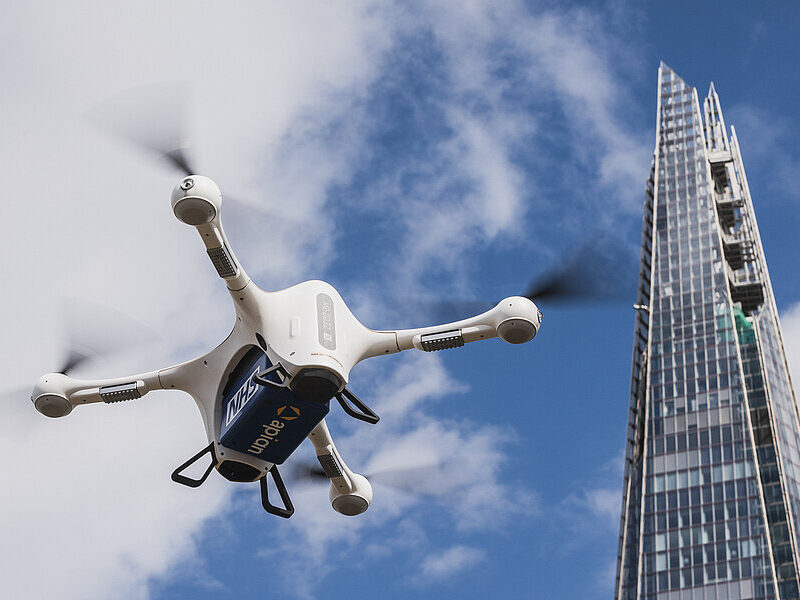

Synnovis and Apian have formed a strategic partnership to further develop the use of drones and autonomous robotics within pathology logistics.
Building on the London pilot
The agreement builds on a pilot that the partners launched in 2024. During the programme, drones carried more than 6,000 pathology samples between Synnovis laboratories at Guy’s Hospital and St Thomas’ Hospital in south east London.
According to SYNLAB, drones completed journeys between the two sites in less than two minutes, compared with road journeys of more than half an hour. The drones also produced zero emissions during flight.
Expanding the drone network
Apian will begin the next stage this autumn by deploying Matternet drones to transport urgent samples from Guy’s Hospital and St Thomas’ Hospital to the Synnovis Blackfriars laboratory hub for specialist testing.
The first flights will carry bone marrow samples that clinicians use to diagnose and monitor blood disorders, including acute leukaemia. The service will also support paediatric patients receiving care at Evelina London Children’s Hospital.
The Blackfriars laboratory currently analyses around 20,000 samples each day. This volume places considerable importance on the logistics network that connects hospitals with specialist testing facilities.
Exploring new autonomous routes
Synnovis and Apian now plan to develop additional routes for other Synnovis customers as they explore further applications for autonomous logistics.
Mark Dollar, CEO of SYNLAB UK and Ireland, said the partnership also gives the organisations an opportunity to explore robotics, artificial intelligence and autonomous logistics across Synnovis and the wider SYNLAB Group.
The project highlights the growing potential for autonomous transport to support time critical logistics. Drone networks could prove particularly valuable in congested urban environments, where traffic and unpredictable journey times can delay the movement of urgent goods.