
An exclusive article by Hans Vermij, Project Director, Royal HaskoningDHV
We need to prepare for a warmer world with more severe weather events. That’s the sad takeaway from COP27 as the Paris Agreement’s 1.5⁰C limit cap on global warming looks all but unattainable. This will have ramifications for us all, not least the potential to disrupt and, in some cases, open new international trade routes.
Drought has impacted inland waterways in Europe for decades, although in recent years, its effects on river transportation have worsened. Last summer, low water levels in parts of the River Rhine significantly reduced the amount of freight transported due to draft restrictions.
This is a big deal, particularly for countries such as Germany which imports nearly one-third of its coal, crude-oil, natural gas and 11% of its chemicals along the river. Traffic on the river accounts for 8o% of its ship-bound cargo while the economies of the Netherlands, Belgium, France, Switzerland, and Eastern Europe also benefit greatly from this inland artery serving a network of canals.
The worst affected section is the middle part of the Rhine. The problem occurs where water levels fall below the official low water mark of 78 cm. Below this, the weight of shippable freight is restricted. According to a paper from the Kiel Institute for the World Economy, “In a month with 30 days of low water, industrial production in Germany declines by about 1%.”
Adaptation strategies already involve barges with shallower drafts and specially designed propellers capable of navigating the depleted waters. A more permanent solution is to canalize this section, but that comes with a huge price tag. The Ijsselmeer – the 1,100 square kilometre lake created when the Zuiderzee was closed to the sea – could serve as a giant water basin to feed such a canal. But competition from agriculture and concerns over loss of biodiversity and natural habitats may thwart this plan.
Another promising solution is to deepen the Rhine at known bottlenecks. Several innovative solutions are being tested, such as raising the river floor by sinking enormous concrete sills on the riverbed.
While it’s unknown if all these measures will work, we do know that the demise of river transportation will only add to Europe’s climate change woes given that barges generate far less carbon than road transportation. However, as warmer summers persist, logistics operations must measure cost and risk and have back-up plans. Multimodal transport options around blackspots may become the new normal, and in the worst-case scenario industries may be forced to relocate.
Plain Sailing
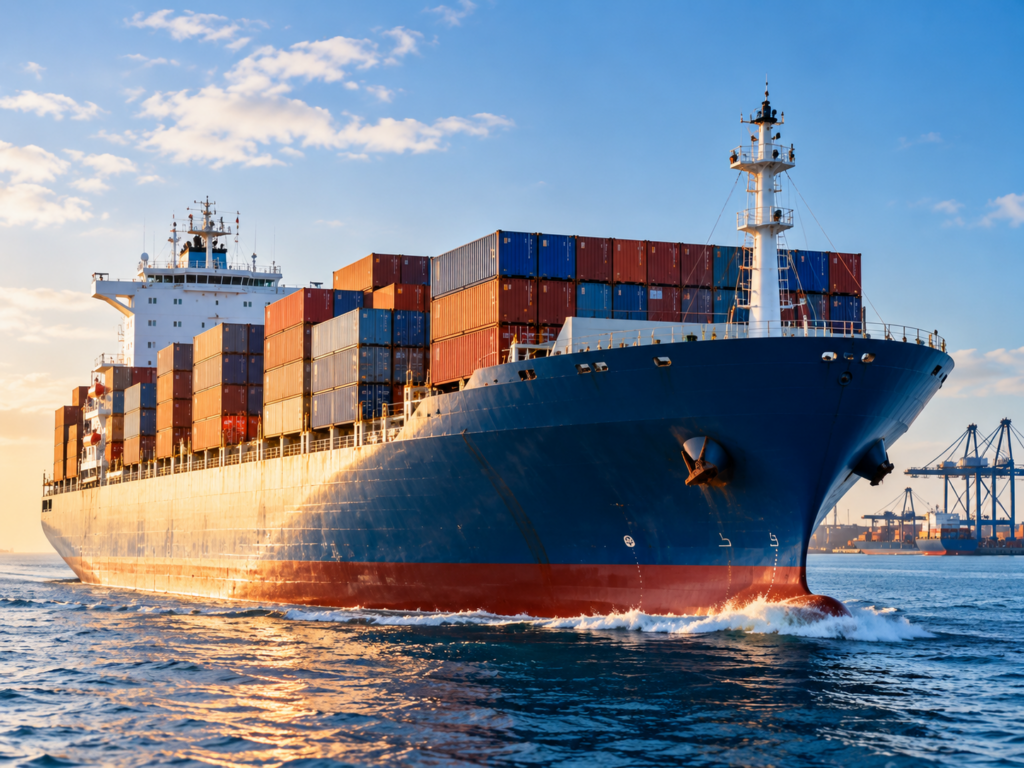
Based on global warming projections, the retreat of Arctic Sea ice will soon make the Northwest Passage navigable to shipping. This route slashes seven days off the 23 days it currently takes to sail from the North American east coast to the Bering Strait via the Russia-hugging Northern Sea Route.
Naturally, shorter routes are generally good for the environment, as ships will use less fuel. This saves operational costs and hopefully will translate into lower prices.
Switching to zero emission fuel, such as hydrogen, will also usher in new shipping routes. During COP27, the UK, US, Norway, and the Netherlands pledged to roll out ‘green shipping corridors,’ describing them as “maritime routes decarbonised from end to end.” Establishing such routes involves investment in refuelling and recharging infrastructure at ports and deploying zero-emission vessels.
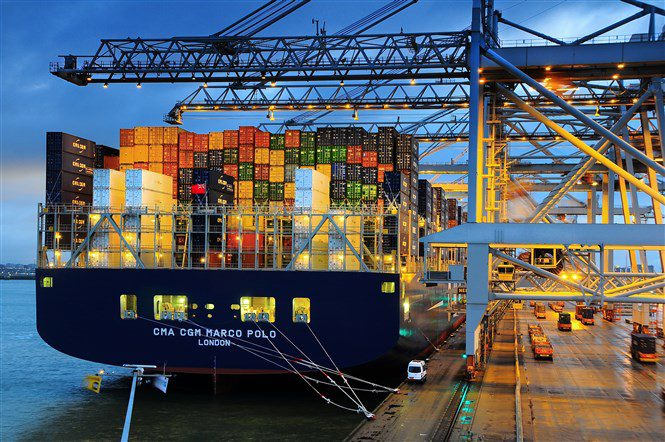
Environmental regulation, increased efficiency, and the need to fend off competition from rival ports is already reshaping ports worldwide. The future belongs to Green Ports that encourage environmentally friendly and sustainable operations in all aspects of their operations, and Smart Ports using digital infrastructure to improve decision making and operational efficiency.
Stormy weather ahead
It’s will not all plain sailing though. Many of the world’s 3,700 ports will need to adapt to rising sea levels, while others with harbours previously considered too shallow could be given a new lease of life.
Perhaps the biggest climate threat to trade routes comes from storms with increased wind speed, wave heights, and rainfall. Weather claimed at least 80 of the 400 vessels lost between 2015 and 20193 and the proportion of Category 3 to 5 cyclones has grown by about five percent per decade since 1979. In response, ship design is adapting to make vessels more resilient and weather monitoring systems have been strengthened.
Storm surges play havoc with the loading and unloading of cargo, resulting in increased bunker consumption and longer overall journey times.
Even if ports are made bullet-proof, their operations may be impacted by storm ravaged infrastructure inland. In 2003, Busan, Korea’s second largest city, was shut down for 91 days by typhoon Maemi. Although the port was repaired relatively quickly, its operation was severely disrupted by damage to roads and bridges inland – an apt illustration of the inter-connected consequences of climate change.
However, when businesses assess risks from natural hazards, they predominantly focus on disasters like floods or hurricanes, and do this only for the highest value facilities or parts of their supply chain. That’s not good enough in these uncertain times, given the complexity of our societies and economies.
Everything is connected
The fact is that climate change alters conditions everywhere. Its inter-connected, often cascading effects need to be understood. For instance, a severe drought in Argentina caused lower harvests which had a broader economic impact. As cash-strapped farmers tightened their belts, sales of heavy equipment, cars, and washing machines slumped. Elsewhere on the continent drought reduced the availability of water in reservoirs which limited energy production.
It is therefore crucial that, as weather patterns change, we assess a broader set of natural hazards and how they impact not only businesses directly but suppliers and customers as well.
The same cause and effect apply to trade routes. Drought impacts river levels, reducing cargo capacity, which impacts deliveries of base materials or finished products. The result: economic output drops and unhappy investors.
Ship owners, logistics companies, port operators and insurers need to be aware what a 2-2.3⁰ C temperature rise will mean for their business as they transition to low or zero-emission fuels. They can’t know it all. Guidance on clean fuels, smart technologies and agile port operations is a must.
Finally, broader risk assessment, examining a host of complex inter-dependencies needs to become the norm. It must be core to logistics and business planning, for it remains the best pathway to build climate resilience and de-risk investments in an increasingly uncertain world.
To read more news and exclusive features see our latest issue here
Never miss a story… Follow us on:
 International Trade Magazine
 @itm_magazine
 @intrademagazine
Media Contact
Anna Wood
Editor, International Trade Magazine
Tel: +44 (0) 1622 823 922
Email: [email protected]