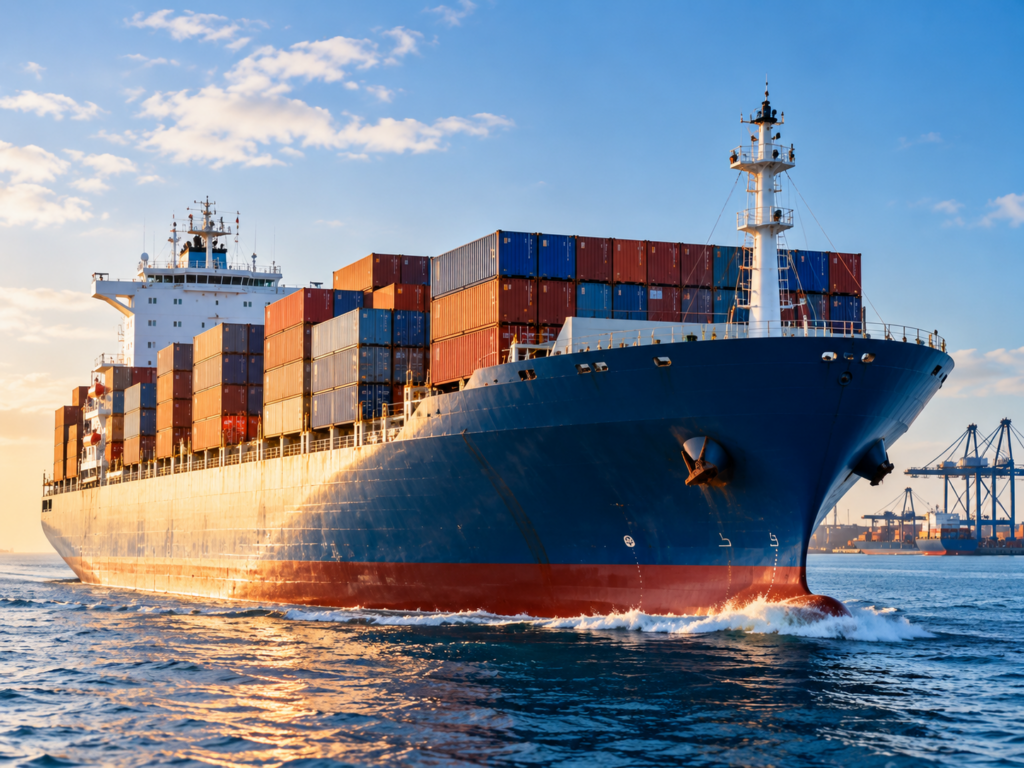
It is known that 80 percent of the world’s goods are transported by sea, and maritime transport is the key element of world trade. Maritime transport moves the world’s food, energy and raw materials and manufactured goods – including medicines and medical supplies that are very important in the fight against the Covid-19. Therefore, there is no doubt that the problems of maritime transportation directly affects the recovery of the world economy from the crisis caused by pandemic. Unfortunately, in the last year the world trade has formed three pain points, which are directly dependent on maritime transport and requires immediate solutions. Otherwise, the prospects for world economy recovery will still be dim.
The first such pain point is the crisis related to the change of ship crews, which has been going on for a year. Based on data from the International Maritime Organization, the numbers of seafarers requiring repatriation after finishing their contracts is around 200,000 as of March 2021, with a similar number waiting to join ships, and this number could rise sharply due to new travel and border restrictions related to new wave of Covid-19 and because vaccination issues are still unresolved. Governments have been taking protectionist positions and this prevents seafarers from moving freely to do their jobs. For example, the introduction of vaccine passports being considered by some governments pose a potential barrier to crew change as seafarers from developing nations are unlikely to have an opportunity to receive vaccines until August at the earliest. Thousands of seafarers still stranded on board ships have mental stress, exhaustion and anxiety. The number of critical incidents and suicides onboard is increasing, according to clinical psychologists at Mental Health Support & Solutions (MHSS). Crew changes are very important to protect seafarers’ health and safety and thereby ensuring the safe operation of maritime trade. And therefore they cannot be postponed indefinitely. Many seafarers ready quit the industry because of this crisis and it may face a large shortage of professional staff in the coming years. For example, nearly 90% of British seafarers have been affected by this crisis and one in two is now considering their future in the industry, research from Nautilus International shows. The situation in other countries is similar.
Hopes that the UN, in cooperation with national governments, could solve this crisis have not yet been realized because of the disagreement between them. For example, currently seafarers in fewer than 60 countries have been designated as key workers and given priority in national Covid-19 vaccination programs. It is difficult to hope to overcome the crisis if this and other important international issues concerning the movement, work and safety of seafarers are not resolved. Experts warn that the crisis is still at an acute stage and could spiral out of control if action is not taken immediately, as it already did in September 2020 when the numbers of seafarers requiring repatriation after finishing their contracts reach around 400,000 ( that’s almost 40 percent of all seafarers in the world ).
The second pain point is the global shipping container shortage crisis combined with shortage of ship space. This crisis can be classified as global, because the lack of containers and ship space has a catastrophic effect on all supply chains and disrupting international trade. Containers are part of a global system and every “import container” that brings goods becomes an “export container” shortly thereafter, transporting other goods around the world.
The crisis has arisen due to a decrease in the number of available containers that has resulted mainly from China’s massive export, to most of the ports were congested and also to a drop in the number of ships operating. In 2020 a huge number of containers from Asia were sent to North America, but due to Covid-19 restrictions, almost no containers moved in the opposite direction and therefore it has turned into a 40 percent imbalance in North America thats means that only four containers were sent back for every ten containers arriving, while six remained at the arrival ports. And their owners are in no hurry to bring these containers back from North America because it costs extra money. In addition two biggest companies in the world that build and sell shipping containers are based in China and currently only Chinese companies have access to the new containers and each container are first loaded with goods in China and used for shipment outside China first before you can get it in the US or Europe. As a result, the price of international shipping skyrocketing. In 2019, transporting a standard 40-foot (12-meter) container on a ship sailing from a Chinese port cost about $1,000 but currently up to $10,000. There is also a significant shortage of available ships and will not be more ships in the short term. The lack of ship space makes the crisis even worse and according to experts, it can continue until the end of this year. Meantime, this whole situation is extremely damaging to world trade. It is now threatening industries and businesses worldwide, from sugar and the auto industry to agricultural exports and leads to a significant increase in the price of goods around the world.
Finally, the third pain point is the extreme vulnerability of world trade to existing transport corridors and routes which the crisis with the blockage of the Suez Canal demonstrated very clearly. A huge container ship blocked for two weeks one of the busiest trade routes in the world, with about 13% of total global trade moving through it. Between 5% and 10% of all seaborne oil is transported through the Suez and the canal is also a transit point for around 8% of global liquefied natural gas (LNG). The Suez Canal is the gateway for the transportation of goods between Europe and Asia ( with over 19,000 transit ships in 2020 ) and about 400 ships, or more than 5 percent of global container shipping, was delayed on either end of the canal. The canal blockade has delayed daily shipments of about $9.6 billion worth of goods including food, oil, gas, timber, manufacturing components and car parts, consumer goods. As a result, businesses around the world suffered huge financial losses.
There is no doubt that should be a thorough investigation of what happened in Suez in order to avoid such incidents in the future. But the problem goes much deeper than this incident. Global trade depends on transit through just two canals, the Suez and Panama, which together account for about 18 % of all global transit. And the development of these canals has not kept pace with the development of world trade. The size of cargo ships is constantly increasing ( for example container ships have nearly doubled in size in the past decade ) and the largest ships are unable to use these canals. Our world already does not have enough the Suez and Panama. At least one alternative canal must be built to connect the Mediterranean Sea to the Red Sea and another to connect the Atlantic Ocean to the Pacific Ocean. The world trade affected by the pandemic needs new solutions that guarantee its development for many years to come and the creation of new and efficient transit routes is one of the solutions.
There are already projects of such routes. For example, UN and UK officials to be reviewing plans to construct a new canal along the Egypt-Israel border. The canal would run in a near straight line from the Gulf of Aqaba in the Mediterranean to the Red Sea. Israel also offers a rail corridor from Ashdod or Haifa ports to the Gulf of Eilat. Under this project, ships can unload their cargoes into trains for shipment from one port to another and then reload them onto other ships. The potential alternatives to the Panama Canal mainly involve the Nicaraguan Canal from the Atlantic Ocean to the Pacific Ocean and Northwest Passage, the sea route between the Atlantic and Pacific oceans through the Arctic Ocean (expected to open with global warming-driven climate shifts in the Arctic).
Clearly, the time has come for decisive action to rectify this extremely difficult situation and any delay could cause irreparable damage to world trade. And the result depends on the joint efforts of the UN, governments, maritime organizations and businesses. Whether they will be able to cope with these and other pain points, the near future will show. I don’t think they want all these problems to turn into a perfect storm when it’s too late to fix anything.
Andrej Statskij, researcher and analyst, writes exclusively for ITM about the current world trade climate
To stay up to date on the latest, trends, innovations, people news and company updates within the global trade and logistics market please register to receive our newsletter here.
Media contact
Rebecca Morpeth Spayne,
Editor, International Trade Magazine
Tel: +44 (0) 1622 823 922
Email: [email protected]