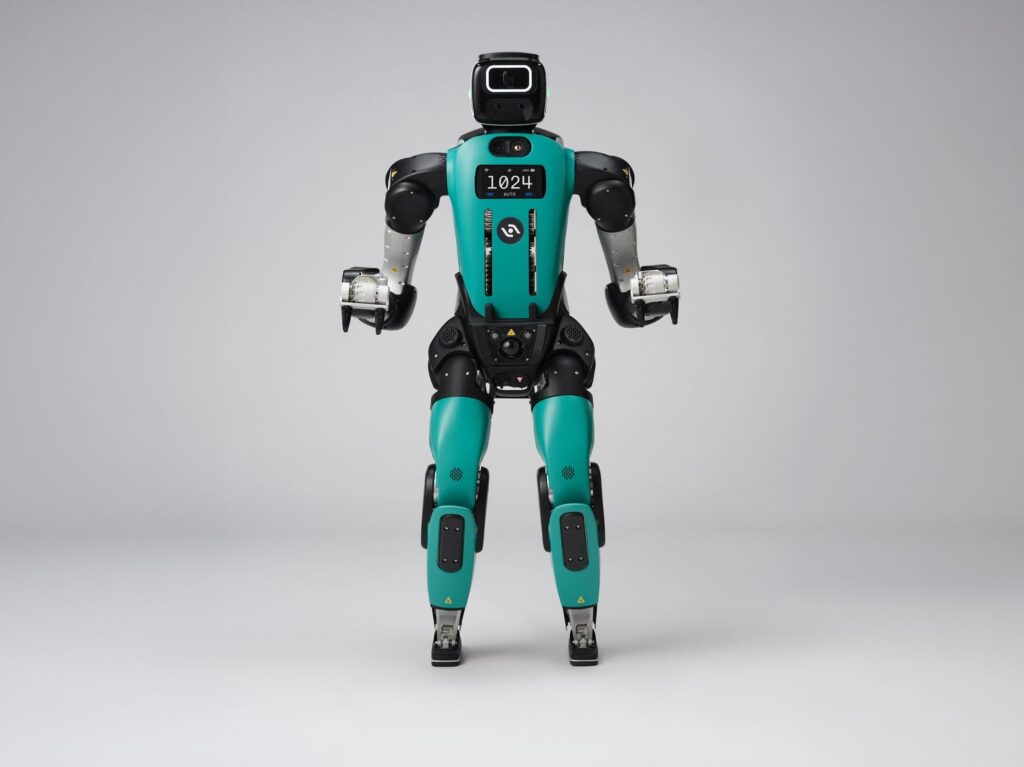
Agility Robotics has unveiled Digit 5, the latest generation of its humanoid robot. With a redesigned platform, it intends to allow the machine to work more closely alongside people in warehouses and manufacturing facilities.
Digit 5 builds on operational experience from the previous generation of the robot, which has been deployed in commercial environments including logistics and manufacturing applications. Agility says its Digit fleet has accumulated more than 65,000 hours of operation. The new machine introduces changes to its safety architecture, battery system, hands and overall durability.
Working alongside people
One of the principal developments is what Agility describes as “cooperatively safe” operation. Digit 5 has been engineered to work in closer proximity to employees without requiring the physical barriers normally associated with industrial automation.
The robot incorporates safety-rated sensing and control systems designed to identify people entering its operating area. The robot will then adjust its behaviour accordingly. This includes slowing or stopping depending on proximity.
Removing or reducing the need for segregated robotic work areas could broaden the range of processes suitable for humanoid automation. This is particularly within existing facilities that were originally designed around manual workflows.
Digit 5 also receives redesigned legs and feet. Its new five-fingered hands intend to increase the variety of objects and tasks it can handle.
Battery improvements are another significant change. Agility designed the platform for extended industrial use. Rapid charging also allows the robot to operate across multiple shifts.
The company cautions that Digit 5 remains in development and that specifications, capabilities and safety features may change.
Wider warehouse applications
Warehouse operators use conventional automation for defined processes, including pallet transport, storage, retrieval and goods-to-person picking. Humanoid platforms can operate within environments and infrastructure originally designed for people.
That could potentially make the technology applicable to brownfield warehouses where extensive changes to conveyors, racking or workstations would be difficult.
However, logistics operators considering humanoid technology will need to assess factors beyond individual robot capabilities. Integration with warehouse management systems, fleet management, employee safety procedures, charging infrastructure and total operating cost will all influence whether deployments can deliver practical benefits.