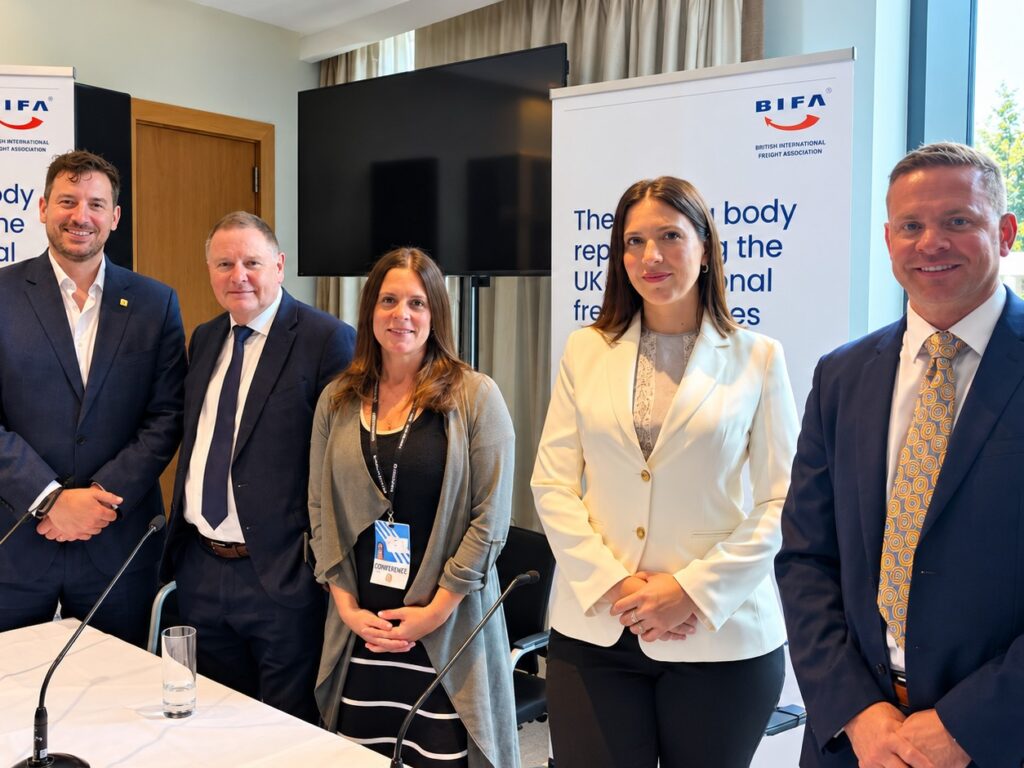

Head of Trade Policy at British Chambers of Commerce William Bain discusses progressions in UK import and export with Editor Joseph Clarke
Please tell us a bit about yourself and what you do
My name is William Bain and I am the Head of Trade Policy at the British Chambers of Commerce. I have worked for the last six years with a wide range of companies, from global retailers to SMEs to the most innovative start-ups, professional services providers and a huge range of others, advocating and advising on the policy and implementation processes around EU exit, the Protocol on Ireland/Northern Ireland, the end of the transition period, and the UK’s new trade outlook, policies and negotiations with key trading partners.
What have been the principal troubles for UK import and export since the beginning of the conflict in the Ukraine?
If we firstly deal with imports, a lot of people outside the sort of trade and manufacturing sectors probably weren’t aware that. Prior to the war, around 10% to 15% of our steel was coming from Ukraine. In terms of foods, considerable amounts of grain, oil and other foodstuffs we imported directly from Ukraine, so in the immediate aftermath of February 2022 there was a supply chain shock. In terms of essential products and the rise in food prices that resulted from retailers in the UK having to source those products from overseas, the Black Sea Deal which Turkey was involved in brokering was important in helping get grain and oils out of Ukraine and back into its trading markets again in the European neighbourhood.
With the rolling imposition of sanctions since that time, it has affected other supply chains too. Companies tell us they used to source timber and other wood products from Belarus and that’s now stopped. They’ve had to lock out and remove Belarus and Russian goods from their supply chains and in some sectors it’s caused some problems because if you look at the automotive sector then a lot of the metals – the cobalt, the copper – which go into making catalytic converters or modern cars, were sourced from Russia. So, industries had to work with the government UM and our like-minded partners overseas to try and rebuild those supply chains from a wartime position. This was very tricky and I think businesses felt some real economic consequences from that.
Then, of course, the sanctions work the other way. And so that meant that goods and services, which UK companies have been selling into the Russian market, have over the last year or so been removed and that market has been closed down to UK companies. So, there were several adjustments that had to be made by companies in terms of their export profile as a result of that. And that’s applied not just to companies exporting fish or food products, but to customers who were previously in Russia. Most of the services industries cannot supply services in Russia as well, so they have had to think about what other alternatives exist to make up the business that they might have had in Russia before the war broke out.
Do you think people working in the supply chain industry were aware of the possible limitations that could occur like these? Or did it take a crisis such as this one for them to realise?
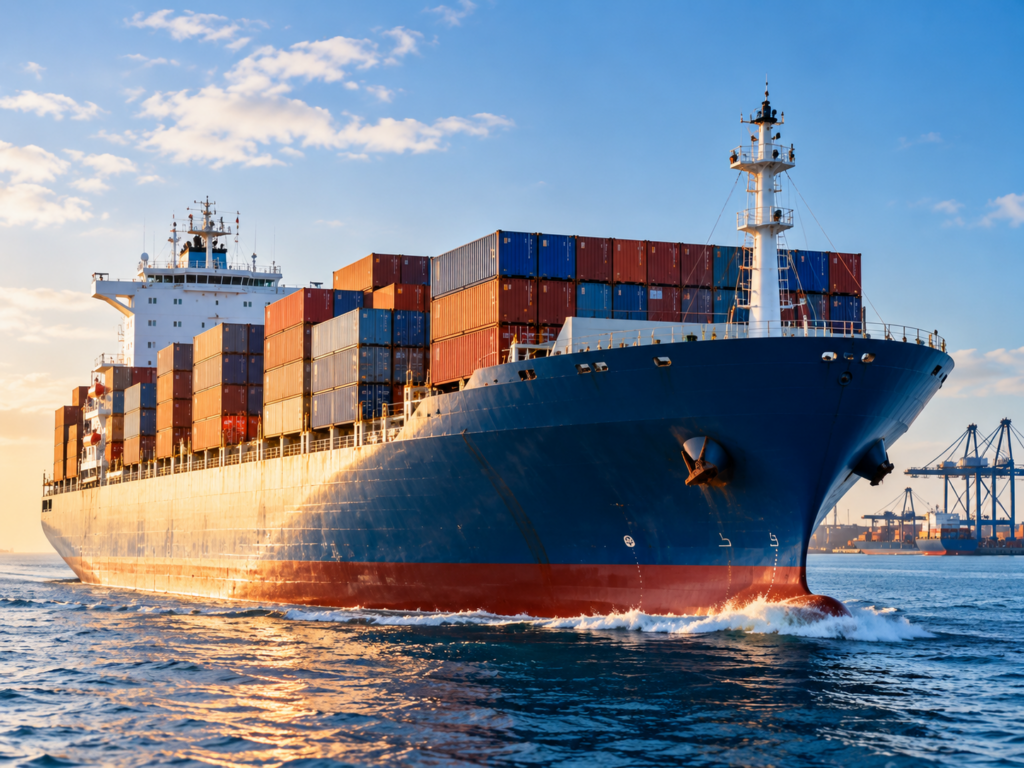
I think there were a few factors here. Obviously with the pandemic, one of the things that happened there was that the price of shipping from China, to either the Western seaboard of the US or Northern Europe, rose – prices of shipping containers for hire went up eightfold.
These were huge increases and that affected the quantities and accessibility of goods or even intermediate products that people were hoping to bring into the UK. So that was in the sense shock #1. Brexit has clearly had an impact on supply chains as well. So that was the second issue and then you’ve had the huge economic aftershocks of the war. In the early part of this decade businesses kind of understood the importance of supply chains but did take things for granted, you know things just moved around without restriction and the costs were relatively low.
That world was then impacted by what was happening with COVID and Brexit. Obviously with the war in Ukraine on top of that, it’s made those points even more salient. So, I guess there was some understanding before it, but there is now a much greater understanding. And I think that the role of supply chains and raw materials in trade policy has increased hugely in the last three years. And that is one of the biggest consequences for our workers and organisations. We are about to publish our trade manifesto in the next few weeks and there is much more on things like supply chains and overall trade policy than would have been the case five years ago.
Regarding UK trade since the beginning of the conflict, what improvements have been witnessed?
In terms of UK trade, the standout story is clearly our exports holding up very well. With periods of global downturn, we’re still seeing modest growth, but nevertheless some growth in services exports. The UK is the second largest exporter of services in the world and of course notwithstanding the headwinds from the move out of the single market and into a different trading relationship with the EU. Their exports to the EU are holding up quite well too. I think that services are something that people in trades don’t talk about enough, but really this is where the UK has maintained its position. We look at services as just being financial services, but we are also talking about legal services, professional services, design, architects, creative services, and so on. So there’s a whole range of things in that category in which the UK, notwithstanding the really choppy waters of the last few years, has been doing very well in and is well placed to expand in during the second half of this decade.
You recently wrote a piece on the UK’s trade deals with Australia, USA and New Zealand. Could you outline the most significant outcome of these deals for UK business and investment?
One of the most positive outcomes has been moving to 0 tariff, 0 quota, on about 99% of UK exports. I recall going to Doncaster a few months ago and while I was there, I spoke with a paint manufacturer who said they were looking forward to tariff reductions and better opportunities through this trade deal to service customers in the Australian market, so there are these kinds of opportunities that companies will be keen to make the most of.
Clearly on the services side there is an expansion of mobility schemes, like the temporary worker scheme and also the youth mobility scheme which will apply to anyone under 35, allowing them to work for up to three years. This offers a good opportunity for business services to be able to have younger staff working, which is good for the economy. I think the other advantages are lower compliance costs through the customs arrangements, so it’ll be quicker, cheaper and easier to get goods to Australia and New Zealand.
They won’t sit in ports undergoing customs processing for as long as was the case before this. So those are really the key advantages with the New Zealand deal. There’s also a very good chapter on green trade which will allow the UK to supply environmentally sound goods and services into that market, in a way that will create extra business opportunities. So those really would be the key advantages – lower tariffs, tariff elimination in many, many spheres, fewer regulations to comply with to get our goods into those markets and more possibilities for younger workers and services workers to take up economic opportunities in Australia and New Zealand.
Read more news and exclusive features in our latest issue here.
Never miss a story… Follow us on:
International Trade Magazine
@itm_magazine
@intrademagazine
Media Contact
Joseph Clarke
Editor, International Trade Magazine
Tel: +44 (0) 1622 823 920
Email: [email protected]