
How can data help reduce the impact of carbon emissions from the supply chain?
Environmental regulations have been making more headlines in recent years as countries around the world begin to look to curb and ultimately eliminate their carbon emissions. Unfortunately, one of the biggest contributors to the global carbon emissions in the supply chain. 50% of greenhouse gas emissions can be directly traced to eight global supply chains. However, final manufacturing only accounts for a small partition of this overall contribution. Most of the emissions are due to the supply chain itself, such as raw material acquisition, agriculture, and transportation.
“Supply chain emissions are, on average, 11.4 times higher than operational emissions, which equates to approximately 92% of an organisation’s total GHG (greenhouse gas) emissions,” according to the US Environmental Protection Agency.
End-to-end supply chain emissions are decidedly higher than direct operational emissions, especially for companies that work directly with consumers. By working towards building a net-zero supply chain, companies will ensure regulatory compliance and negate their overall impact on the global climate. Interestingly enough, the costs associated with reaching a net-zero state for carbon emissions are lower than one might expect, resulting in a nominal price increase of 1% to 4% on consumer products.
Why is there little progress towards net zero supply chains?
Despite it being a relatively nominal cost passed on to the consumer to decarbonise the supply chain, relatively little progress has been made in making that a reality. If low cost wasn’t incentive enough, there’s also the matter of regulatory compliance, which could cost companies harsh fines, penalties, fees and delayed movements within the supply chain.
In order to fully understand both the nature of the problem as well as finding a workable solution requires a deep and comprehensive view of the supply chain as a whole. Fortunately, there are steps that every organisation, regardless of size, can begin to take now, and it all begins with data.
Rooting out inefficiencies with operations
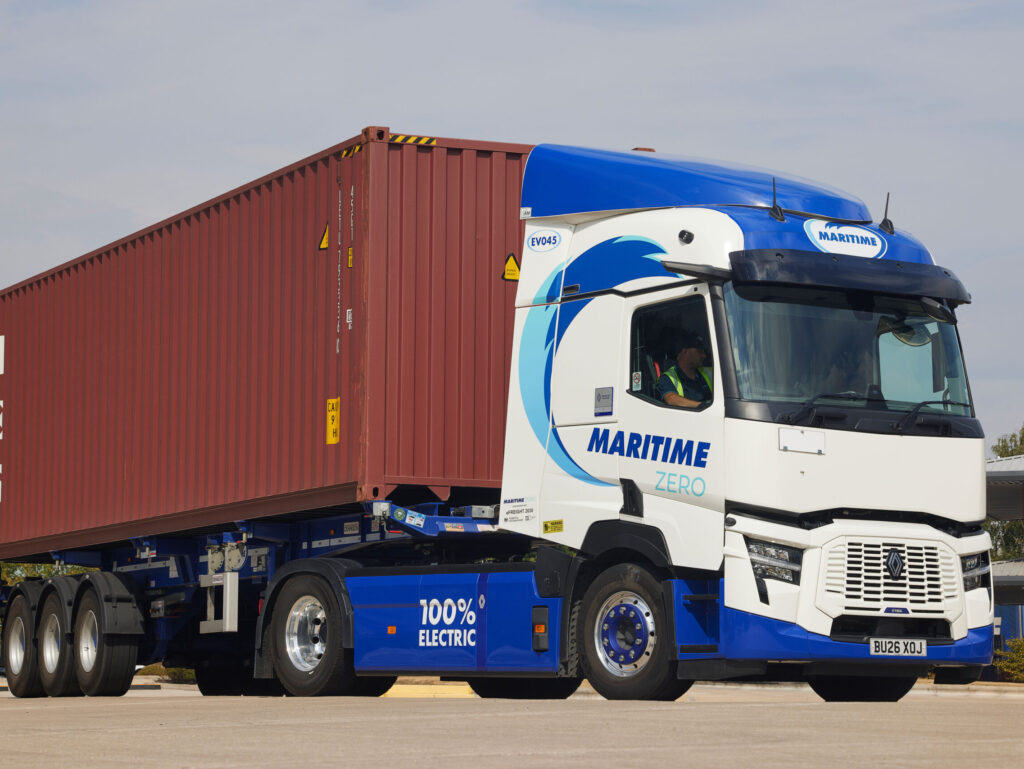
Perhaps the biggest benefit of increasing visibility is the insights gained from the big picture view of the supply chain. The data collected allows logistics and C-Suite team members to zero in on various operations and understand what is working well and what isn’t. Unfortunately, there is no such thing as a perfect supply chain. Somewhere along the lines, there are going to be inefficiencies. Transportation, in particular, is rife with empty miles, repetitive movements, and wasted time and energy. Shoring up these weaknesses not only curbs extra emissions generated. As 30% of all carbon emissions are generated by trucking, every bit counts.
How C3 Hive Changes the Game
Unfortunately, the way modern warehouses are set up is not at all conducive to running an efficient operation. One of the biggest issues is how drivers are received. There is a lack of communication between the driver and the warehouse, leaving receiving up to a first-come-first-served basis. Drivers who are late could be turned away because the warehouse is simply overrun with other trucks looking to unload. This means a driver now has to pull away, drive to a rest area and come back later, or sit idle and wait for a bay to open. These delays are all too common and are contributing more to the carbon emissions created by the trucking industry.
On a sustainability level alone, C3 Hive changes the way drivers and warehouses communicate with each other. Drivers are able to check in ahead of time when they arrive, which lets the warehouse know which loads are on time and which are late. This optimises the gate-in/gate/out times, meaning the driver is back on the road faster, with no wasted miles due to warehouse reroutes. This is the type of real-time data that will bring supply chains to net-zero.
To read more exclusive features and latest news please see our March issue here.
Media contact
Rebecca Morpeth Spayne,
Editor, International Trade Magazine
Tel: +44 (0) 1622 823 922
Email: [email protected]