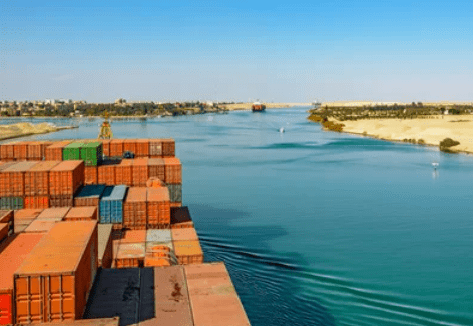

Following multiple attacks in the Red Sea, ITM Editor Joseph Clarke shares growing concerns for global shipments and expert insight on what to expect in the months to follow
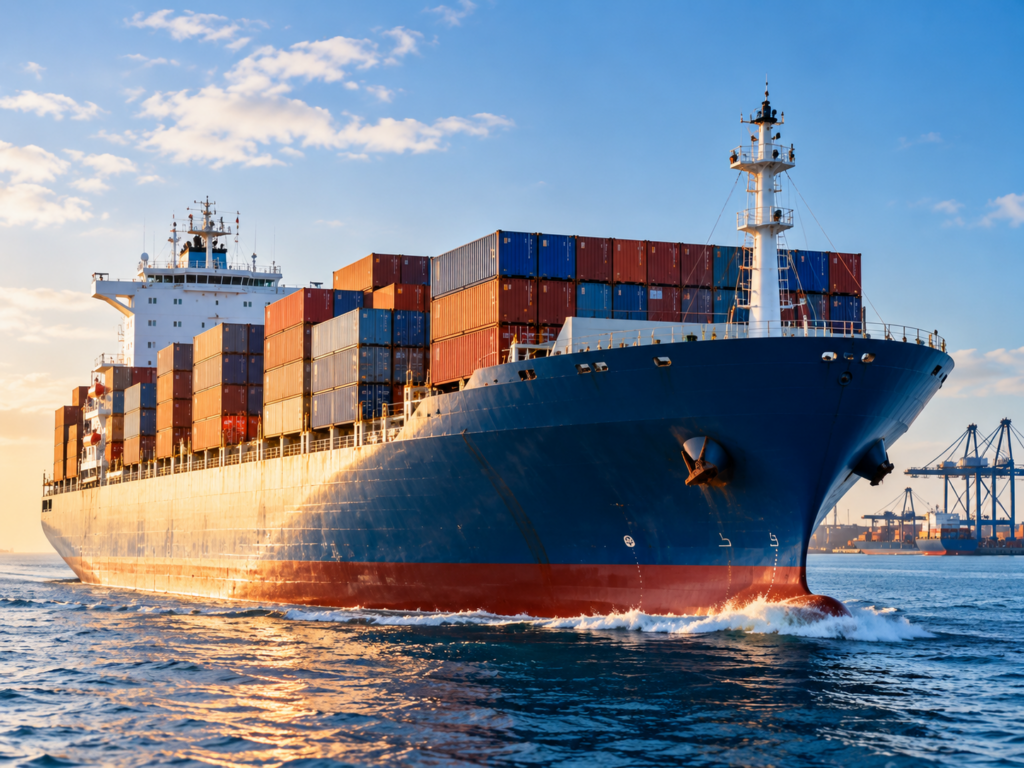
In light of recent attacks on cargo ships in the Red Sea and growing concerns across the globe, numerous major shipping corporations have been forced to steer clear of these dangerous waters.
The attacks are reported to have been carried out by a group known as the Houthis – a rebel group with Iranian support that controls a large part of Yemen – and began after the start of the Israel-Hamas war on 7 October, with the Houthis declaring their support for Hamas and claiming that they will target ships that are travelling to Israel.
While it cannot be confirmed that all of the ships attacked to date were in fact travelling to Israel, back in November, one ship that was on its way to this destination was seized and, since then, several other commercial vessels have been attacked by drones and ballistic missiles. This has sparked global worry and action has already been taken by governments to try and protect ships. The US, for example, has launched an international naval operation and other countries like the UK, Bahrain, France, Canada, Spain and Norway have followed suit.
These disruptions inevitably stand as a huge obstacle and a great worry for shipping lines, businesses and customers across the globe; and have already led to major shipping firms including Mediterranean Shipping Company, Maersk, Hapag-Lloyd and the oil company BP all having to divert their vessels away from the Red Sea. But doing so is far from a smooth-sailing operation and in fact will see both short-term and longer-term consequences.
Common concerns
Already, experts around the world have voiced their concerns, attempting to shed light on the situation and offer some degree of advice and optimism. Mario Veraldo, Founder of MTM Logix, is one of many professionals to have already shared his views regarding the disruptions that are already taking place and those that are expected to follow.
In a recent press release issued by MTM Logix, Mario explains that “as attacks on container ships in the Red Sea and Suez Canal have caused major shipping lines worldwide to suspend their transits in the area, which is a strategic rendezvous point, a domino effect on world trade is expected. This is of great worry to the industry as around 10% of global trade passes through the Red Sea, including 30% of global container traffic.” As Mario goes on to point out, “this includes possible delays in cargo movement in different regions, increased pressure on alternative transport routes and increased demand for transport services in unaffected areas.”
According to an analysis by the company, “bunker adjustment factors (BAFs), general increase in transport fares, and some war surcharges are expected to be implemented in the coming days, affecting not only diverted services, but potentially all services due to the interconnected nature of global shipping networks. This is likely to affect the entire industry, regardless of the contractual or spot rates of individual carriers.
“Attacks on container ships by Houthi rebels have raised extreme concern for the flow of oil, food, grain and consumer goods through this important artery of world trade”, says Mario Veraldo, CEO of MTM Logix.
Mario also affirms that as vessels will have to be diverted around Africa, this “will increase transit times on Asia-Europe routes and all those connecting to the Mediterranean, and as a result, cause longer waiting times for berthing, unloading and cargo processing. Even regions not directly linked to Red Sea or Suez Canal traffic may experience delays and unpredictability in transport schedules. The additional time around the Cape of Good Hope, for example, will take between 12 and 20 days depending on the speed of the ship and possible port congestion.”
Marco Forgione, Director General of the Institute of Export and International Trade, also commented on the repercussions of the attacks and the consequences of shipments being rerouted around South Africa. In a press release issued by the IOE & IT, he explains:
“The impact of the rerouting of shipping around South Africa’s Cape of Good Hope due to attacks in the Suez Canal over the last month will be felt by consumers in the coming weeks, with the prices of many products rising imminently following weeks of delays in products arriving in the UK.”
As Marco accurately highlights, we now find ourselves in a situation of uncertainty and complication, but what we can be certain of is that with this level of disruption the costs of transporting goods via alternative, less convenient routes will rise, and therefore higher prices can be expected for customers and end-consumers.
“We face an uncertain and potentially difficult period, with items including fruit, meats, seafood, grains, wine, tea, coffee, and clothing and key ingredients such as palm oil and energy costs all impacted by delays and knock on disruption to supply chains, which could take months to resolve,” warns Marco.
“Whilst it’s impossible to predict precisely how prices will rise over the coming weeks and months, it is inevitable that we will see the price of products on our shelves being impacted. Key indicators such as oil, wheat and rice have already increased by 5%.”
Marco also recognises the possible effects that this will have on inflation rates, stating that the “anticipated inflation of certain items, particularly those from outside the EU, is expected due to both shortages and spoilage of fresh goods with limited shelf life. While retailers are working to manage the impact of price rises, other challenges in 2024 are also at play: transportation and shipping insurance costs have skyrocketed – doubling over the past few weeks – and with business rate rises and new border checks coming in, markets are preparing for a prolonged period of uncertainty and disruption.
“We are also seeing these delays impacting shipping base rates – which is how much it costs to ship a container – with rates for goods traveling from Asia to both Europe and the US increasing. Some of the biggest shipping firms, including Maersk, are also imposing extra fees, known as surcharges, in order to mitigate the re-routing of ships around Africa.”
But perhaps more worrying than the increasing prices that we are already witnessing is the fact that the disruptions are not likely to be resolved swiftly. On the contrary, the situation looks like it may in fact worsen and require greater support and action from government and defence.
“The current situation unfortunately looks as though it will escalate with the UK Defence Secretary suggesting UK is considering attacks on Houthi positions in Yemen, as part of the Operation Prosperity Guardian coalition, and Iran sending a naval vessel to the Red Sea. If the situation does escalate Iran could threaten shipping transiting the straits of Hormuz further impacting global energy prices,” Marco advises.
Moving forwards
I decided to reach out to Mario Veraldo from MTM Logix and Marco Forgione from IOE&IT to gain further insight and find out how they feel about the imminent future of cargo shipments through the Suez Canal.
When speaking with Mario, he highlighted the important role that supply chain control towers and AI will play in the months that follow, stating that the “towers will be important allies to overcome this crisis”, while “the integration of Artificial Intelligence in these towers” will enable “data-driven decision making, which means that companies can receive timely alerts about possible delays, allowing them to adjust their strategies in an agile and precise way.”
Offering a certain level of optimism, Mario explained that “the towers emerge as a beacon of hope for companies, as these technological marvels offer centralised monitoring of the entire supply chain, allowing companies to monitor their shipments, assess stock levels in real time and anticipate potential disruptions.
“Careful monitoring ensures that, even during events like this, customers can have an overview of what is happening and plan ahead. We keep a close eye on the situation and are prepared to make the necessary adjustments to maintain the efficiency and reliability of their logistics needs,” he concluded.
My conversation with Marco Forgione began by me asking what shipping lines are doing and what they can do to overcome this huge obstacle, to which he replied:
“In response to the challenges posed by Houthi attacks in the Red Sea, shipping lines are strategically adapting their routes to mitigate risks. Many are diverting ships away from high-risk areas, opting for routes along the coast of Africa or around the Cape of Good Hope. And whilst this helps ensure the safety of cargo and crew – which is of the utmost importance – it comes at a cost.”
Marco then went on to explain that diverting shipping routes incurs additional fuel expenses, prolongs transit times, and contributes to the overall increase in container rates. Additionally, the heightened operational complexities result in delays and logistical hurdles for businesses involved in international trade. Therefore, he revealed, to navigate these obstacles effectively, shipping lines are implementing dynamic risk management strategies to safeguard both the security and efficiency of global maritime transportation.
With regards to his predictions for the rocky months ahead, Marco explained that a further increase in prices and delays in the supply chain for key ingredients such as palm oil, rice, tea and coffee, is to be expected. “To address this situation,” he explains, “international collaboration is crucial. Operation Prosperity Guardian, a community of nations, can play a pivotal role by providing naval support for shipping, including measures to counter drones and repel Houthi attacks.
“However, a long-term solution to the issue may ultimately hinge on a political resolution. While short-term measures can enhance security, a comprehensive and sustainable resolution will require diplomatic efforts to address the root causes of the conflict in the Red Sea region.”
When it came to concluding my conversations with both Mario and Marco, naturally I felt encouraged to try and extract some sort of optimism around the way forward – a light for the end of the tunnel. Thus, my final question was, ‘What advice can you offer to shipping lines and businesses relying on shipments affected by these disruptions?’
According to Mario Veraldo, Founder of MTM Logix, “Shipping lines have to be careful not to make this situation a payback for what happened in 2023, however, everyone involved in global trade needs to recognise the gravity of uncertainty this situation exposes their businesses to. In 2023, we went from rocket-high rates to low production costs very quickly which has given a false sense of normalcy to a lot of companies operating global supply chains. They have not really planned for the worst and are now exposed to the uncertainties associated with the Red Sea Disruption.
“The best way to tackle these challenges is to rethink their supply chains and ensure they can divert some of them from highly impacted trades (Asia – Europe) to low impacted areas (Latin America). Then, ensure that they can keep on adjusting those supply chains accordingly, using tools like supply chain control towers.”
Marco Forgione, Director General of the Institute of Export and International Trade, concluded:
“For shipping lines and businesses grappling with the challenges posed by the situation in the Red Sea, it’s crucial to adapt and strategize. Diversifying shipping routes and exploring alternatives, such as the Cape of Good Hope, could help mitigate risks, although it may come with added costs and potential delays.
“Additionally, staying informed about geopolitical developments in the region and maintaining open communication with relevant authorities and industry networks is essential. Collaboration within the shipping community can foster collective efforts to navigate the uncertainties. Finally, businesses should consider reassessing contingency plans and exploring risk mitigation strategies to better cope with the evolving situation in the Red Sea.”
Read more news and exclusive features in our latest issue here.
Never miss a story… Follow us on:
International Trade Magazine
@itm_magazine
@intrademagazine
Media Contact
Joseph Clarke
Editor, International Trade Magazine
Tel: +44 (0) 1622 823 920
Email: [email protected]