
The forum, held via an interactive webinar entitled ‘Drones and autonomous vehicles: The future… now?’, presented the current advances in autonomous transport in the air, at sea and on land. It examined the benefits and limitations of the technologies as well as the accelerating effects on adoption within international supply chains brought about by the current crisis
The development of drones, autonomous road vehicles and unmanned ships has been rapid in recent years. The benefits of such automation to freight transport infrastructure are often enumerated – sustainability, cost reduction, environmental protection and resistance to disruption. However, the adoption of such technologies has seen a degree of resistance due to concerns over safety, security, levels of investment and variable regulatory regimes.
“To provide a forum at which the pros and cons can be explained and debated was our primary aim,” says TT Club’s MD Loss Prevention, Mike Yarwood. “Some of the concerns about widespread use of autonomous transport methods, safety and security for instance, can be in fact improved in certain circumstances through the technology. At TT Club, one of our fundamental principles is the dissemination of best practice and risk mitigation across all modes. We feel therefore that an understanding of, and debate about, the implications of automation is vital for its responsible development.”
Participating in the forum under Yarwood’s guidance were: Svilen Rangelov, Co-Founder and CEO at Dronamics; Pranav Manpuria, CEO of autonomous truck developer, Flux Auto and Hussain Quraishi, Strategic Innovation Manager at Wärtsilä, a leader in smart technologies for marine and energy markets. Each emphasised the advantages of autonomy on the transport modes in which they specialise.
In the air, most notably Rangelov outlined the flexibility of drones in delivering cargo to smaller and possibly more remote centres of population as economically and as swiftly as larger cities. Speed to market for urgently required supplies, such has been seen during the COVID-19 crisis, was also emphasised.
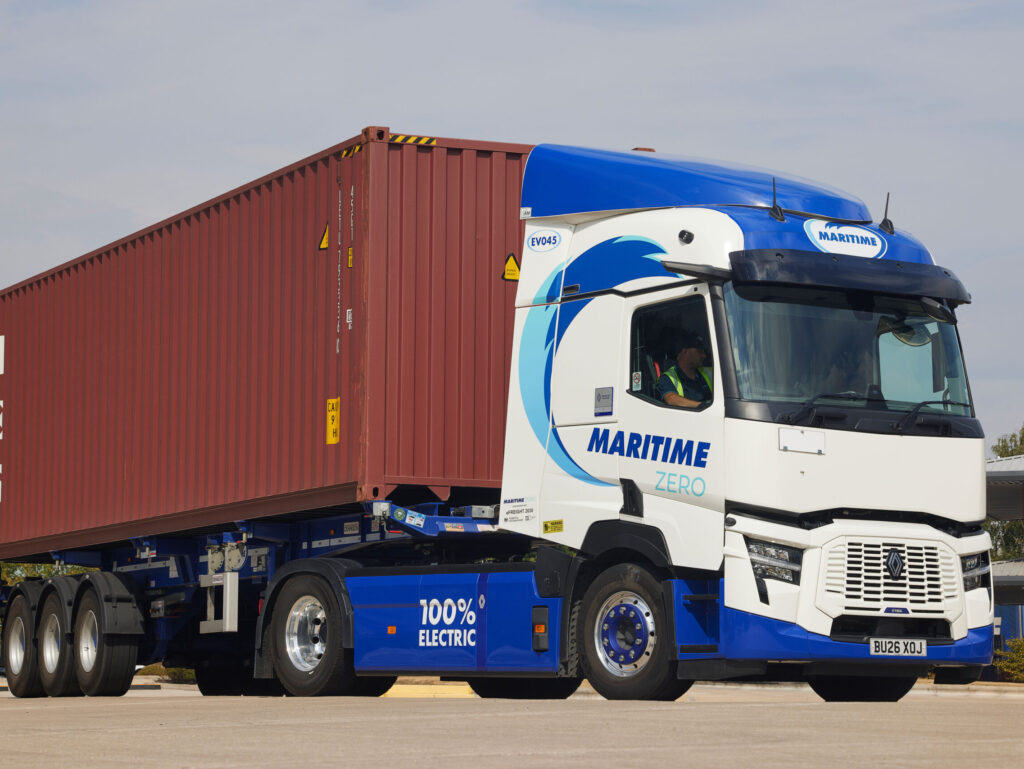
Taking a broader slice of the supply chain, Manpuria suggested that driverless trucks could be slotted into a transport system that also features automated warehouses, ports and freight terminals. Computer-guided inventory selection, product picking and packing and lift-truck operations can be integrated with optimum road vehicle scheduling to improve supply chain efficiency.
At sea, the near-term benefits of autonomy including increased safety and voyage optimisation have already been realised. The medium-term benefits of reduced crew are expected to impact coastal cargo vessels the most, where crew expense forms a higher percentage of operating costs and where enhanced situational awareness and precise manoeuvrability is at a premium. Wärstilä’s autonomous technology in the marine sector is well advanced across smart sensors, smart routing and smart vessel control. The technology is demonstrable and has been proven to enhance safety and provide operational savings.
So what of the barriers to more rapid development? “The COVID-19 crisis has certainly acted as an accelerant for change in potential adoption of autonomous technology, as it has in other aspects of supply chain management,” says Yarwood. “But significant barriers need to be overcome. Our panel identified a number of these and responded to concerns from the webinar’s participants around the world.”
As an obstacle, perhaps surprisingly, the level of investment required is not high on the list. A lack of uniform regulation across national governments and even within countries is a major block to autonomous vehicle and drone deployment. This is an incidence of regulation and certainly international authorities not keeping pace with commercially driven technological advancement.
Environmental hazards such as bad weather, winds and high seas affecting drone operation and autonomous ships, and icy and rain-effected roads are seen as challenges that technology can cope with and the avoidance of human error is generally seen as an asset in improving safety. A vulnerability to cyber-attack that is perceived to increase with the use of computer-controlled vehicles is a strong disincentive to adoption, the forum concluded.
“However, this particular threat is of critical concern across the supply chain in general,” says Yarwood. “And autonomous transport with all its environmentally sound and economically tempting characteristics will continue to progress.”
A recoding of the webinar proceedings can be viewed here – https://vimeo.com/438946190
An overflow of Q&A’s can be found with this link: https://i.emlfiles4.com/cmpdoc/4/9/5/3/files/673720_drone-webinar-qa.pdf?dm_t=0,0,0,0,0
Share this post on Twitter or LinkedIn.
See more news here.