
TT Club is warning about the specialised nature of moving military-related cargo through commercial supply chains. Safety, security, regulatory compliance and political considerations must all align.
Military logistics is a continual feature of global supply chains, not simply a function of large-scale mobilisation during conflict. Weapons systems, munitions, missiles, propellants, grenades and component parts move between manufacturers, storage facilities, ports and end users worldwide, including in peacetime.
As defence budgets rise in many countries, military cargo moving through commercial supply chains is also increasing. While some shipments are managed directly by military organisations, many involve freight forwarders, road hauliers, port operators and shipping lines.
A specialist category of dangerous goods
Military cargoes often fall within Class 1 dangerous goods, covering explosives and related articles. The risks vary significantly according to classification. Class 1.1 products present a mass-explosion hazard. Meanwhile, articles classified as 1.4S are designed so that, if ignited, hazardous effects remain largely confined within the packaging.
Classification can have significant consequences for transport costs, routing options and regulatory obligations. The consequences of misdeclaration are severe. Military shippers are generally subject to rigorous oversight, extensive testing procedures and elevated due-diligence standards.
Navigating a layered regulatory and security framework
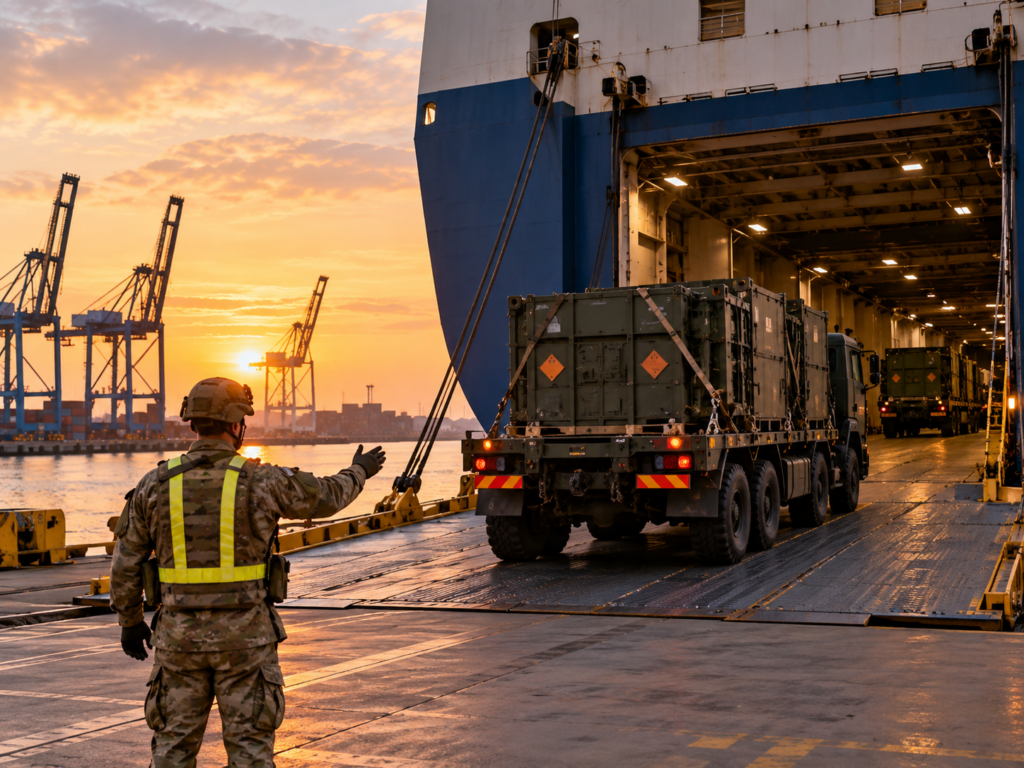
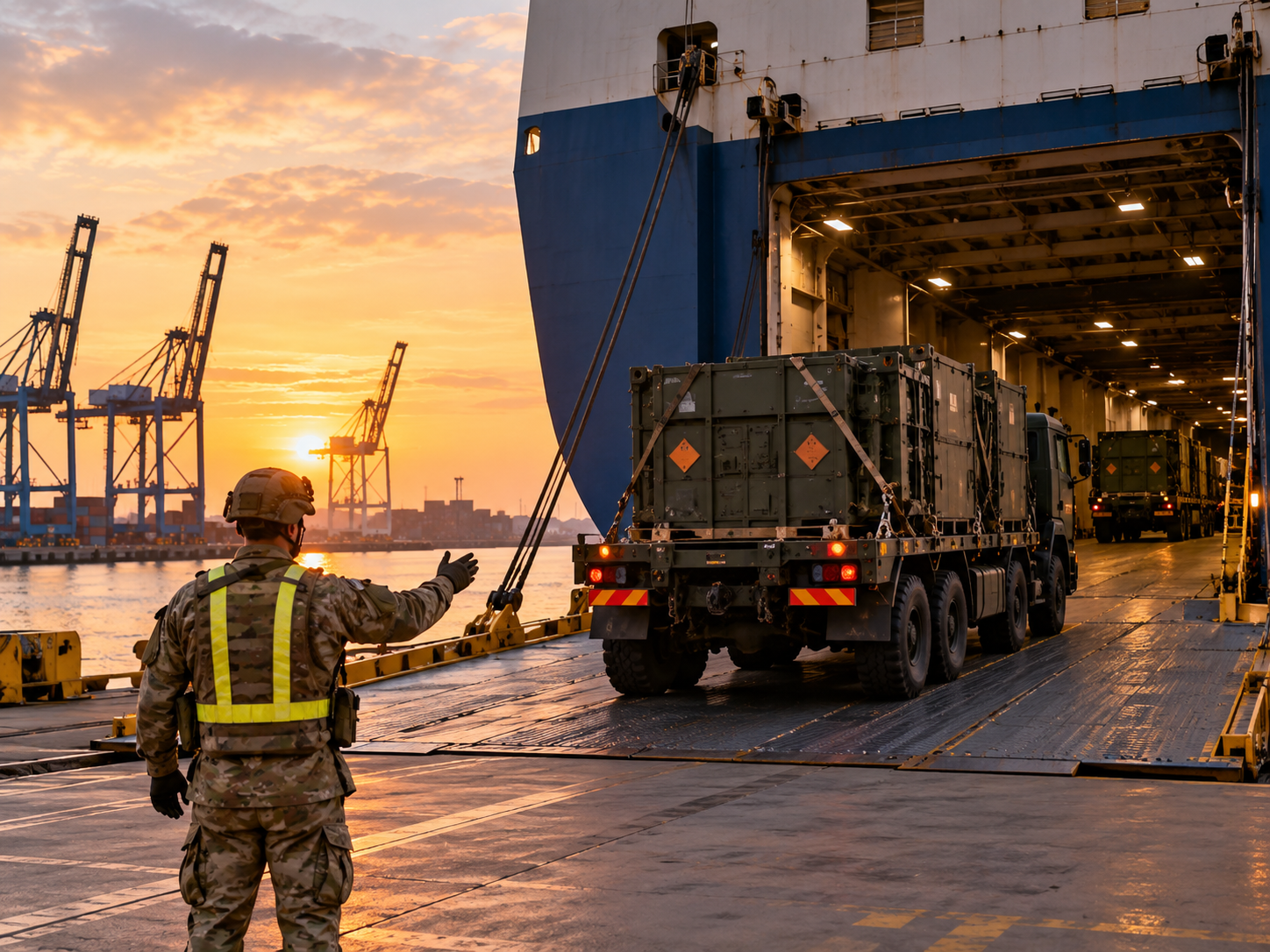
Most military cargo moves by sea and road, with air transport generally reserved for operational or urgent requirements. For substantial volumes, chartering an entire ship can be more practical than using liner services, and may offer flexibility to use remote ports with higher explosives limits.
Each movement must also navigate dangerous-goods regulations, export, transit and import licences, trade-control requirements and, in some cases, political approvals.
Security provisions can go far beyond those normally associated with commercial freight. They may include continuous surveillance and attendance, security-cleared personnel, signature controls, detailed tally records and chain-of-custody documentation. Under a witness-load system, drivers remain with cargo until they have seen it loaded aboard the ship. Destination drivers undertake a similar role.
Managing the operational realities of military logistics
Explosive-quantity limits can restrict the amount of cargo loaded onto one ship, requiring shipments to be split or segregated. Commercial ports rarely permit the storage of explosives before loading or after discharge, so direct delivery to and collection from ships is normal practice. This requires enough certified vehicles and drivers to maintain a constant supply without delaying the port call.
During periods of mobilisation, peak cargo volumes can cause congestion across ports and hinterland networks, while specialist resources such as ADR-qualified drivers can become scarce. Delayed shipments may also require secure temporary storage if they cannot return to the manufacturing site or enter the port before their loading window.
Expertise throughout the supply chain
Military cargo movements require more than arranging transport. Participants need to confirm that competent-authority approvals, permissions to possess, export, transit and import cargo, and suitable insurance arrangements are in place across every relevant jurisdiction.
“Military-related cargo cannot be treated as simply another category of dangerous goods,” says Mike Yarwood, TT Club’s Managing Director, Loss Prevention. “Every movement demands detailed advance planning, specialist knowledge and close coordination between shippers, carriers, ports, authorities and insurers. A failure at any point in the chain can have serious safety, legal and commercial consequences.”
Illegal trade, sanctions violations and export-control breaches may carry significant legal and financial consequences. It could prejudice the availability of insurance cover.