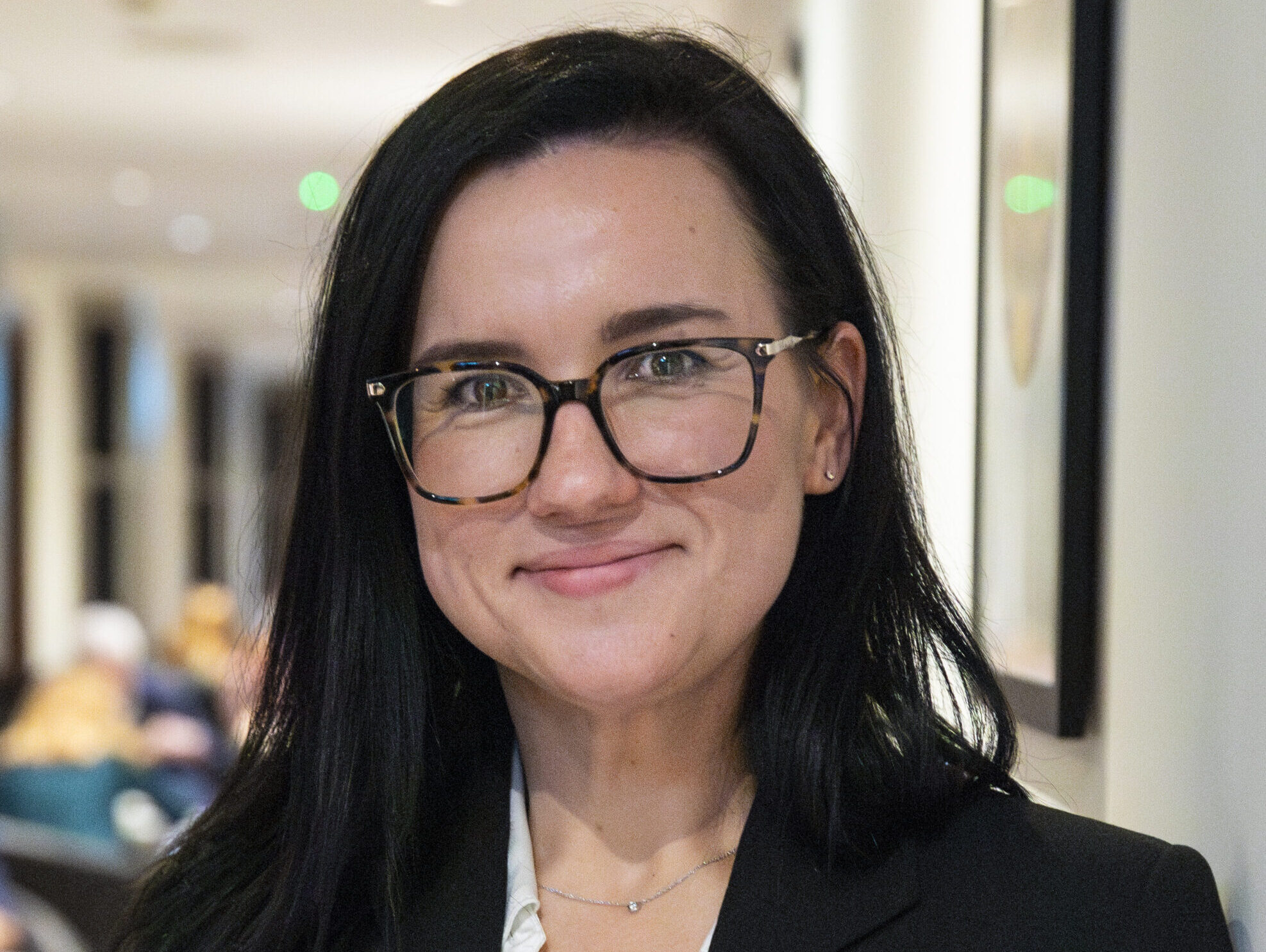

Anna Doherty, Technical Director at the Chartered Institute of Export & International Trade, explains why the changing customs landscape is forcing businesses to rethink how trade compliance fits into the modern global supply chain.
What does genuine customs modernisation need to deliver for businesses operating complex international supply chains?
Having worked both in industry and in advisory roles, I think businesses are less concerned about whether a customs process is digital and more concerned about whether it is efficient, predictable and proportionate.
Genuine customs modernisation should allow businesses to provide information once and then securely reuse that information throughout the movement of the goods. Today, too much effort is spent reformatting, duplicating and manually re-entering data that already exists elsewhere within commercial and logistical systems.
The goal of customs modernisation should not just be faster clearance. This should be the side effect of processes that improve visibility, reduce administrative costs and result in stronger compliance with better risk management across the supply chain.
As border processes become more digital and data driven, what additional information will businesses need to capture, verify and share to ensure goods continue to move efficiently across international borders?
Businesses will need greater visibility over their products, suppliers and supply chains. Beyond traditional customs data, there will be growing demand for information relating to origin, manufacturing processes, materials, supplier due diligence and end-to-end supply chain movements. We are seeing this already in new regulations requiring supply chain data that goes beyond knowing where the product was shipped from, with businesses now needing to know where the products began their lifecycle and how they were produced.
The challenge is not necessarily that businesses will need entirely new data, but that they will need systems capable of capturing, validating and sharing that information in a structured and reliable way. Data quality will become increasingly important because digital customs systems are only as effective as the information that supports them.
As governments make greater use of automated risk assessment and analytics, businesses will need confidence that the data they submit is accurate, consistent and traceable back to reliable sources.
How should customs and trade compliance teams be involved when businesses assess new suppliers, markets and supply chain routes?
One of the biggest lessons many businesses learned in recent years is that customs, sanctions and regulatory issues can no longer be treated as an afterthought. Decisions about sourcing, market entry or supply chain restructuring often have significant customs implications that can affect cost, lead times and operational viability.
Customs and trade compliance professionals should be seen as strategic advisers rather than simply technical specialists who become involved only after a commercial decision has already been made. For example, we have seen such issues with procurement decisions being made based on the cost price of the product from the supplier, without understanding that anti-dumping duty would then apply and remove the entire profit margin.
Governments are introducing greater due diligence requirements covering areas such as product origin, materials and supplier activity. How significantly will this change the level of visibility businesses need across their supply chains?
Historically, many businesses focused on the transaction itself and perhaps their direct supplier relationship. Increasingly, regulators want businesses to understand much more about where products originate, how they are produced, who is involved in the supply chain and what risks may exist beyond Tier 1 suppliers.
In practical terms, this means businesses need greater visibility, stronger governance and better quality supply chain data than they may have traditionally maintained. However, this can pose challenges with suppliers unwilling to share commercially sensitive data that might be needed for due-diligence purposes.
With different jurisdictions developing their own requirements around sanctions, sustainability, provenance and due diligence, how difficult is it becoming for businesses to maintain consistent customs compliance across multiple international markets?
Businesses are having to navigate a growing number of regulatory requirements that often develop at different speeds and follow different implementation models.
Even where objectives are broadly aligned, differences in data requirements, reporting obligations and compliance expectations can create significant complexity such as with the UK and EU’s Carbon Border Adjustment Mechanisms. Businesses trading internationally are increasingly required to manage multiple compliance frameworks simultaneously.
This places greater emphasis on having strong internal governance, robust trade compliance functions and technology capable of supporting consistent compliance across multiple jurisdictions.
What does this changing environment mean for the role of customs brokers and freight forwarders?
Customs brokers and freight forwarders will continue to play a critical role in international trade for the foreseeable future. In the UK, the vast majority of customs declarations are submitted by intermediaries rather than traders themselves, and despite the availability of direct submission routes, most businesses still choose to use specialist providers.
I do not see the industry moving away from the use of intermediaries any time soon. What I do see is their role potentially evolving as customs processes become increasingly digital and supply chains become more data driven. Businesses might expect greater support beyond the preparation and submission of declarations. However, intermediaries will need to consider whether they wish to move into advisory space or perhaps take on additional responsibilities such as becoming a fiscal representative under the Low Value Imports Regime changes.
That evolution presents significant opportunities, but it also comes with different responsibilities. Providing advisory support requires a deeper understanding of a client’s business, stronger governance, greater professional competence and clear accountability for the advice being given. Intermediaries would potentially then need to consider how to demonstrate their expertise to clients, either by applying for certain industry standards or getting a qualification from a reputable educational body in the sector.
Ultimately, the intermediary sector will remain a vital part of the customs ecosystem, but its value will increasingly lie not only in processing customs declarations, but in helping businesses navigate a more complex and data-driven trading environment.
Where can AI and automation make the greatest difference to customs processes, and which decisions will continue to require experienced customs professionals?
AI and automation have considerable potential in customs and border management, particularly in analysing large datasets, identifying anomalies, validating information and automating repetitive processes. We see this use already in both business and customs administration work.
Many customs teams still spend significant time gathering data, reconciling information across systems and carrying out routine administrative activities. Those are the areas where technology can deliver immediate benefits.
However, customs is ultimately a profession built on judgement. Decisions involving classification, origin, valuation, sanctions exposure or complex regulatory interpretation often require experience, context and professional expertise.
Therefore, while the use of AI and automation can assist in improving tasks and providing efficiencies, there is a risk that the expertise and critical analysis of customs subjects disappear with significant AI use. There is also an outstanding question of ultimate liability, which I think requires a look at current policies through the lens of the use of modern technologies.